AHS: Asylum

American Horror Story: Asylum is apart of the American Horror Story anthology series and is based in Briarcliff Sanitorium in the 1960s. In the show, the sanitarium started out as a tuberculosis hospital but was bought by the Catholic Church in 1962 to become a sanatorium for the criminally insane where Monsignor Timothy Howard was named director. Under his direction, Sister Jude ran the asylum very strictly and oversaw the other sisters including Sister Eunice.

somvei | Film stills, American horror story, American horror
Sister Jude in episode 1 after talking to Lana Winters about the different patients’ illnesses. Lana was attempting to understand the different patients reasons for being in the Asylum and Sister Jude did not agree with her notion of mental illness. Source: Pinterest (https://www.pinterest.com/pin/555842778991818059/)

Sister Eunice starts the show out as an innocent woman who genuinely cares for the patients’ health. As the show progresses, Sister Eunice is possessed by the Devil and through small actions she topples the entire structure of the hospital and gets Sister Jude admitted to the hospital herself.

Black And White Death GIF - Find & Share on GIPHY
Sister Mary Eunice talking a psychopathic girl that was left at Briarcliff by her mother after allegedly killing her friends. (Episode 6)
Source: Giphy (http://alone—-together.tumblr.com/post/110376396523/tumblr-a-we-heart-it-on)

Dr. Arden is the doctor at the hospital who was hired by Monsignor Howard to continue his research on patients to create a vaccine that would prevent any type of disease. Dr. Arden is also accused of being a Nazi Doctor by a patient that claims themselves to be Anne Frank.

Crazy American Horror Story GIF - Find & Share on GIPHY
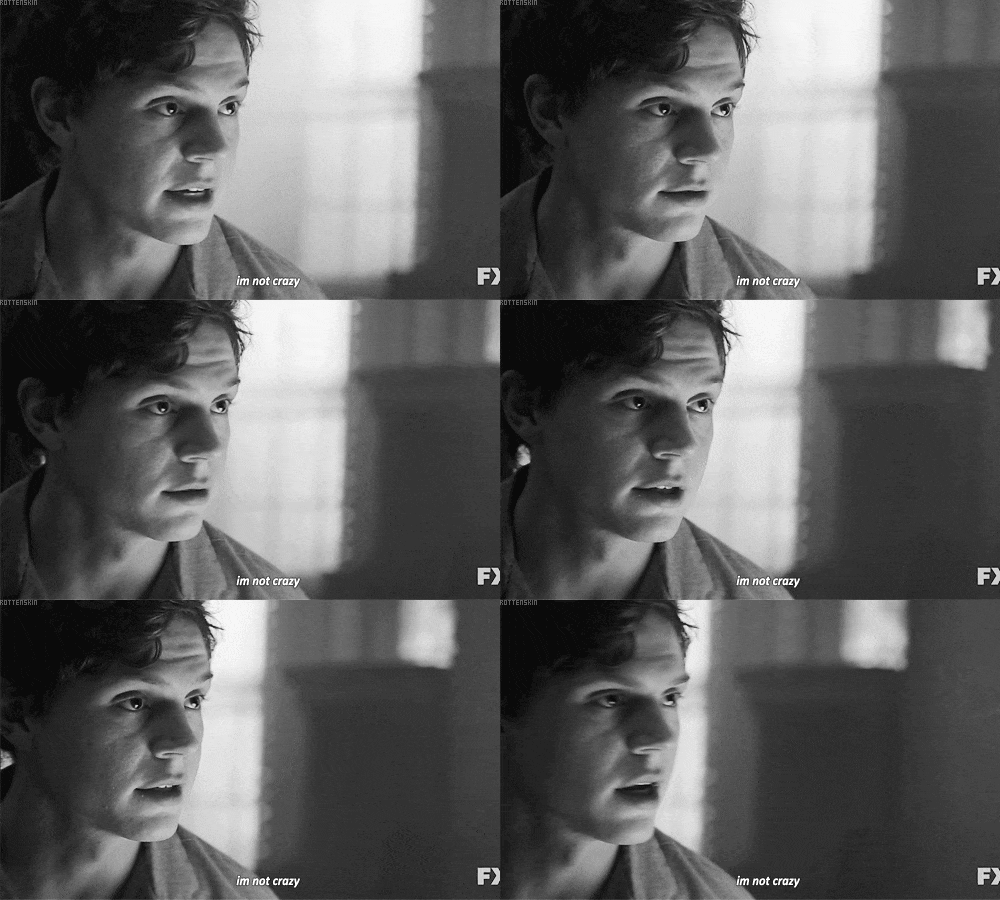
Kit Walker after being admitted to Briarwood and refusing to accept the accusation that he is insane and Bloody Face. (Episode 1)
Source: Giphy (http://lastwordem.tumblr.com/post/46000185139)

In the beginning of the show a man named Kit Walker (Evan Peters), is possessed by what is assumed to be aliens and it accused of being Bloody Face – a serial killer of women who takes their skin as trophies – but does not remember an instances of killing anyone. Dr. Oliver Thredson is put on Kit’s case to determine whether he is guilty or not and while in the hospital, Dr. Thredson befriends Lana Winters. Lana Winters was forcibly admitted to the hospital for being gay after she broke into the hospital to write an exposé.

Season 2 Lana GIF - Find & Share on GIPHY
Lana Winters after being forcibly admitted by Sister Jude and receiving electroshock therapy in episode 1.
Source: Giphy (http://horrorstorygifs.tumblr.com/post/34038750262)

Since the show is based in an asylum, it shows a lot of different treatment styles that we have seen throughout this semester. The show, however, is an intense dramatization of asylum patients and treatments. Many of the treatments within this show are shown to be abusive and invasive. Lana Winters, one of the main characters is a lesbian, which in the 1960s is not very accepted. Dr. Thredson offers to help Lana overcome his illness through what he calls “Diversion Therapy”, like Conversion Therapy. He injects her with apomorphine while showing her images of naked women to attempt and make her feel ill by looking at those images. He then tries to get her to be attracted to another male patient. He quickly realizes that this treatment will not work for her and apologizes for the pain he caused her.

Lana Winters doing “Conversion-Aversion Therapy” at the hand of Dr. Thredson. (Episode 4)
Source: http://www.beyondfandom.com/2012/11/american-horror-story-asylum-making.html

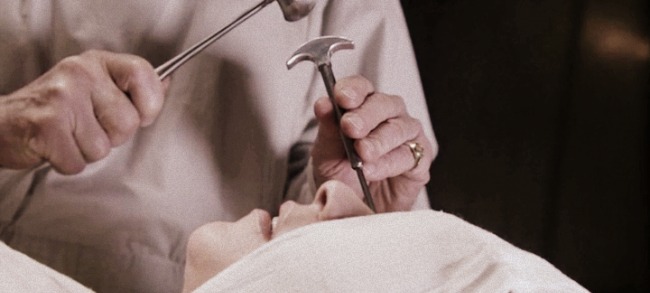
Lana also experiences shock therapy at the hands of Sister Jude to attempt and alter her memories so that she cannot write an exposé on the hospital. Dr. Arden also administers a lobotomy to Anne Frank to help her Post-Partum Depression and PTSD. Sister Jude also forced Grace to be sterilized after having sex with Kit Walker even though the hospital has no jurisdiction to administer that type of procedure to patients.

cinematic corner.: Saturday TV Special - American Horror Story: Asylum -  2x03, 2x04, 2x05.
Dr. Arden preforming a frontal lobotomy on Anne Frank after he reccomended it to her husband to alleviate her aggression and halluciations. (Episode 5)
Source: https://cinematiccorner.blogspot.com/2012/11/saturday-tv-special-american-horror.html

This show represents the abusive parts of asylums that we have come aware of through this class. However, we know that Asylums were not always abusive and were at times extremly beneficial if not essential to patient care. This show very much dramatizes mental illness and treatments and pulls on the lack of medical knowledge to support the characters actions and beliefs.

“Spinning Out” and Bipolar Disorder

Throughout the topic of mental health in United States history, there is a consensus that people with mental health disorders either feel like they do not fit in with society, society does not accept them, or both. Even in the 21st-century, people still see the topic of mental health as unspeakable. According to Dr. Alexander Salerno of Salerno Medical Associations, “There’s clearly a shortage — not just in primary care — but mental health in our country when it comes to physicians and providers. Depending on the cultures, it’s a bit of a taboo topic to talk about mental health.”1 This topic of “taboo” is represented in a variety of media from books, movies, and TV shows. One TV show that discussed the issues of having a mental health problem in modern times is Spinning Out.

Spinning Out (2019) is a Netflix TV show that focuses on the cutthroat sport of professional figure skating. The show follows Kat Baker, a figure skater who hopes to make it to the Olympics one day. However, her Bipolar Disorder prevents her from achieving her dreams. She tries to keep the secret of her condition in order to compete, which leads to disastrous results. Throughout the show, the audience watches Kat as she attempts to keep close ties with her family and friends while also struggling with the complications of her condition.

Source: Netlix2

From the very first episode, the audience sees the severity of Kat’s condition. During From the very first episode, the audience sees the severity of Kat’s condition. During practice, a skater suffers an injury on the ice and leaves for the hospital. Seeing the injury causes Kat to flashback to when she fell on the ice and injured her head during competition. She starts breathing heavily and looks worried. She heads to the locker room, where she ends up biting her arm until it bleeds.

Source: Tenor3

The NIMH says that the symptoms of Bipolar Disorder can include: “racing thoughts” and making unhealthy choices.4 Throughout the series, Kat continues to bite herself whenever she has a panic attack.

Later on in the series, Kat decides to stop taking her lithium as a way of competing better. Her rationale for stopping her medication stems from the side effects of lithium. Drugs.com states, “Avoid becoming overheated or dehydrated during exercise and in hot weather.”5 Kat, practicing, is making her symptoms worse by heavily exercising, so she decides to stop taking it. However, she reveals her secret when she goes through a manic episode. She buys a variety of items from a pawn shop and invites strangers to an impromptu party. She becomes distracted and violent as her friends discover her condition.

Source: Amantes Desafortunados6

After her secret was out, many people she was close to started distancing themselves from her. Her partner ends their relationship, she loses her best friends’ trust, and her partner’s dad describes her as “crazy.” She sends apologies to her friends but slowly gains their trust. One of her friends would not even trust her when she said that a doctor was abusing her sister.

Source: Show Runner7

Spinning Out shows that mental illness is a complicated and sometimes taboo topic. Kat struggles with keeping her condition a secret while also trying to understand herself and her medication. While she can get back on her medication, she loses her friends. Even in modern times, people living with mental health problems struggle to fit into a society that does not want them to fit in.

Works Cited

Biting Kaya Scodelario GIF – Biting Kaya Scodelario Kat Baker – Discover & Share GIFs. Accessed November 7, 2021. https://c.tenor.com/5UV2-1O9m8QAAAAd/biting-kaya-scodelario.gif.

“Lithium | Drugs.com.” Accessed November 7, 2021. https://www.drugs.com/lithium.html.

“NIMH » Bipolar Disorder.” Accessed November 7, 2021. https://www.nimh.nih.gov/health/topics/bipolar-disorder#part_2262.

Spinning out – Kat’s Episode [1×08]. Accessed November 7, 2021. https://www.youtube.com/watch?v=mlXJM6Z9Y18.

Spinning Out (1×10) – Kat Finds Serena’s Secret Lover. Accessed November 7, 2021. https://www.youtube.com/watch?v=7OR5QmfK7dM.

Spinning Out | Official Trailer | Netflix. Accessed November 7, 2021. https://www.youtube.com/watch?v=AmdnhR1Ie7g.

StaffNov 06, News 12, 2021, 2:32amUpdated on: Nov 06, 2021, and 3:58pm. “New Jersey Doctor Wants to Bridge Gap between Mental Health & Primary Care.” News 12 – The Bronx. Accessed November 7, 2021. https://bronx.news12.com/new-jersey-doctor-wants-to-bridge-gap-between-mental-health-and-primary-care.

  1. StaffNov 06, News 12, 2021, 2:32amUpdated on: Nov 06, 2021, and 3:58pm, “New Jersey Doctor Wants to Bridge Gap between Mental Health & Primary Care,” News 12 – The Bronx, accessed November 7, 2021, https://bronx.news12.com/new-jersey-doctor-wants-to-bridge-gap-between-mental-health-and-primary-care.
  2. Spinning Out | Official Trailer | Netflix, accessed November 7, 2021, https://www.youtube.com/watch?v=AmdnhR1Ie7g.
  3. Biting Kaya Scodelario GIF – Biting Kaya Scodelario Kat Baker – Discover & Share GIFs, accessed November 7, 2021, https://c.tenor.com/5UV2-1O9m8QAAAAd/biting-kaya-scodelario.gif.
  4. “NIMH » Bipolar Disorder,” accessed November 7, 2021, https://www.nimh.nih.gov/health/topics/bipolar-disorder#part_2262.
  5. “Lithium | Drugs.com,” accessed November 7, 2021, https://www.drugs.com/lithium.html.
  6. Spinning out – Kat’s Episode [1×08], accessed November 7, 2021, https://www.youtube.com/watch?v=mlXJM6Z9Y18.
  7. Spinning Out (1×10) – Kat Finds Serena’s Secret Lover, accessed November 7, 2021, https://www.youtube.com/watch?v=7OR5QmfK7dM.

Shutter Island

See the source image
“Shutter Island”. Blogspot.com. 2021. http://2.bp.blogspot.com/-VS1lHFD_4SM/UoqN2SxZl3I/AAAAAAAAKCE/XzFR_kd1HDs/s1600/Shutter+Island.jpg.

Shutter Island begins with the protagonist, U.S. Marshall Teddy Daniels and his partner Chuck Aule taking a boat to Shutter Island. Shutter Island was the home to Ashecliffe Asylum for the criminally insane. Ashecliffe has a ward system depicted in the movie is very similar to asylums we have read about like Ionia. Teddy and his partner were sent to the asylum to investigate the disappearance of a patient named Rachel Solando who had supposedly murdered her three kids. While Teddy had experienced the traumatic death of his wife, he also had PTSD from World War I when he liberated the prisoners at Dachau.

“Teddy Daniels Talks about War German Concentration Camps – Shutter Island (2010) Movie Clip HD Scene.” n.d. Www.youtube.com. Accessed November 8, 2021. https://youtu.be/oF99aB8nd9o.

However, Teddy had really taken the case to find the man who had murdered his wife, Andrew Laeddis. Andrew was said to have been on Shutter Island and Teddy was determined to find him. But first, Teddy would set his sights on finding Rachel. Teddy then interviews various patients and doctors about Rachel, and they seem to be confrontational towards him. After a short amount of time Rachel is found much to the surprise of Teddy. This begins to raise suspicions as to the motives of the asylum doctors and staff. Teddy and Chuck venture to ward C, the most violent ward. There he meets a patient he recognizes. His name was George Noyce, and he warns Teddy that the staff have set up the whole investigation to trick him. He also mentions that the lighthouse has been experimenting with lobotomies.

“Shutter Island (5/8) Movie CLIP – a Rat in a Maze (2010) HD.” n.d. Www.youtube.com. Accessed November 8, 2021. https://youtu.be/9DlWhZ45k5w.

Teddy then goes with Chuck to search for the lighthouse. While searching, Chuck seemingly falls off the cliff and Teddy goes down to find his body. While at the bottom of the cliffs, Teddy finds a woman who claims to be the real Rachel Solando. Rachel states that she was a former nurse and was turned into a patient because she spoke out against the experiments being performed on patients.

“Shutter Island: The Real Rachel Solando (HD CLIP).” n.d. Www.youtube.com. Accessed November 8, 2021. https://youtu.be/PoHSsEgFNHM.

The questionable experiments with psychopharmacology and psychosurgery in the movie were seen in asylums we have talked about in class. After meeting Rachel, Teddy now believed that Chuck was taken to the lighthouse to be experimented on, so he sets his sights on the lighthouse. After reaching the lighthouse, the asylum director is waiting patiently for him at his desk. The director states that Teddy was really Andrew Laeddis and was the one who had murdered his wife after she killed his kids due to her being manic depressive. At this point in the movie, it is revealed that the investigation was all an attempt to release “Teddy” from his delusions. He needed to come to terms with his past and the fact that he had killed his wife. Everything sinister Teddy had uncovered was all results of his delusions. Overall, this movie relates heavily to our discussions in class. The movie grapples with the debate over psychosurgery vs psychopharmacology, the effects of medication on patients, the treatment of returning soldiers with PTSD, and

“Shutter Island (6/8) Movie CLIP – My Name Is Edward Daniels (2010) HD.” 2010. YouTube. 2010. https://youtu.be/eveUzWmTxl4.

The director tells Andrew that if he does not accept that he needs treatment, then he will be lobotomized. The doctor wished to try something less evasive because he did not believe in lobotomy as much as psychopharmacology. This is similar to the shift in medical professionals’ willingness to treat noninvasively vs a more permanent physical option like lobotomies. Andrew accepts his fate for a short while but then is shown reverting to his old ways and is lobotomized.

“Shutter Island (8/8) Movie CLIP – Live as a Monster or Die as a Good Man (2010) HD.” n.d. Www.youtube.com. Accessed November 8, 2021. https://youtu.be/Z_0TQHoV_2I.

Hist of Mental Health Digital Research Paper

Below is a link to my Google Doc version with correct citations.

https://docs.google.com/document/d/1_0mw2wn8SnWMfE0c7MuanOOGlPvwQWgfJNHg4znLbWc/edit?usp=sharing

Hello, my name is Theron Gertz and I will be discussing the modern history of bipolar misdiagnosis 

As trite as it is to start a project with a definition, I find it essential here due to the key terms and varied history implicit within it. To begin this project without discussing these would be like starting a presentation on astrophysics without first defining gravity or electrons. Doing so also grants us a conceptual home base from which to branch outward and connect back new topics and information, such as the many biographies and medical journal entries this project will draw upon. The Mayo Clinic defines bipolar disorder as “a mental health condition, formerly called manic depression, that causes extreme mood swings that include emotional highs (mania or hypomania) and lows (depression).”

The first thing we might notice first about the Mayo Clinic definition is that bipolar disorder was formerly known as manic depression. The term “bipolar disorder” was only penned around 1966 by psychologists Jules Angst and Carlo Perris, which is why texts before this period show no sign of it. In fact, the term did not appear on the DSM until its third edition, published in 1980. Still, there is no doubt that individuals have been aware of these symptoms for thousands of years. As “Bipolarity from ancient to modern times: Conception, birth and rebirth” points out, Greek physicians from the Classical Period––notably Hippocrates––identified mania and melancholia as early as 400 BCE. 

Connecting this back to the Mayo Clinic’s definition of this word, we again see the term “mania” (including hypomania as a sub-category), this time followed by a new descriptor word for melancholia, depression. One of the most contentious issues when diagnosing someone with bipolar disorder is how long they must show either of these symptoms to qualify. Far from “showing excitement” or “feeling bad,” these symptoms must be present in patients for a continuous and extended period. While generally agreeing on that front, many physicians have conflicted feelings about exactly how long that period must be. Overall, “one week” seems to be the norm. However, personal opinion and clinical experience lead to variance between practitioners. 

The discussion of a bipolar spectrum may also further abstract this issue. While very likely dangerous, we would be remiss in not first exploring some of this idea’s positive aspects as outlined by its proponents. For example, many support the creation of conceptual spectrums for disorders like B.D., autism, and schizophrenia due to their ability to represent people better. Mental health diagnoses/treatment strategies are notoriously rigid and may not fully speak to a person’s lived experience. Thus, this concept possibly encourages people in the early stages of the disorder or who present somewhat differently to seek out diagnosis or treatment. It may also significantly reduce stigma by moving away from the stereotypical, extreme-end depictions we so often associate it with.

Still, physicians are generally wary of it for a good reason. Mainly, they fear that the belief that people don’t need to fit all the diagnostic criteria for B.D. may lead to erroneous self-diagnosis. Unlike previous eras, the late 2010’s onward have seen mental health issues borderline-glamorized in popular media. 

Websites like Tumblr, Instagram, and TikTok are notorious for fostering groups that seemingly promote mental health issues and may lead to rampant self-diagnosis. The latter of these apps––TikTok––will appear later in this project under the Misdiagnosis and Future Concerns sections. 

Another confounding factor in the history of misdiagnosis is that the chance of comorbidity is remarkably high for most mental disorders. For example, the comorbidity rate of ADHD is estimated at around 70%. While bipolar disorder’s rate is slightly lower, (10-60%, depending on which disorder is being discussed), it still very likely contributes to clinicians missing something if only considering a single diagnosis. 

Bipolar disorder symptoms can also present as shockingly similar to other disorders such as borderline personality disorder, major depressive disorder, and schizophrenia. Looking at each of these individually, we quickly gain an understanding as to why. Borderline personality disorder presents itself very similarly to bipolar disorder, with individuals showing rapid mood or personality shifts, and high suicidality. Major depressive disorder is often ascribed to incipient bipolar patients mainly due to how notoriously difficult manic symptoms are to identify (false positive).

Lorraine Blackburn outlines this experience firsthand in her memoir Alive With Bipolar, in which she discusses her initial misdiagnosis of major depressive disorder, and how it negatively affected her life. Much of the book covers blame-placement for this event, although it tends to surprisingly empathize with the family members and practitioners involved. Perhaps partly, this may be due to the fact that Blackburn herself was unable to notice her BD symptoms for so long. 

Discussing why all this is important, there is the obvious answer that misdiagnosis is harmful. Individuals with bipolar disorder who are misdiagnosed may rapid-cycle or display worse manic symptoms as a result. However, we must note that improper diagnosis is especially damaging in the case of bipolar disorder due to its unique chemical makeup. Discussing false negatives––those being cases where an individual is falsely diagnosed with another disorder or none at all––, we must note that early medical treatment of bipolar disorder is crucial. Unlike other diseases, symptoms of bipolar disorder often deteriorate/exacerbate over time. 

In The Dark Side of Innocence: Growing Up Bipolar, author Terri Cheney discusses her experience with delayed diagnosis, stating that her image as a high-achieving, all-American girl made it difficult for those around her to perceive anything wrong with her. As she explained, only the worsening of her symptoms led to crucial medical treatment. Hypersexual episodes, slipping grades and suicidal ideation were only a few of the consequences of such a late diagnosis, as she explains it.

Lisa Cooper similarly states that her early bipolar symptoms were difficult to identify due to childhood trauma. While complex PTSD is most often conflated with BPD, it is not unreasonable to assume the same could happen with bipolar disorder. Specifically, with Cooper, she saw her decision to run away from home and live on the road as a lucid decision––which it might have been––that was free of neurochemical influence––which it might not have been. 

Looking into both of these stories, we come across the very real fact that clinicians may have issues separating adolescent angst from genuine signs of disease. As one TikToker posting under the #bipolar feed explains, her therapist allegedly conflated her extremely reckless behavior and excessive sexual episodes with simple teenage happiness. 

Such an instance may bring to mind past clinicians’ tendency to misdiagnose or overdiagnose women with BPD by conflating it with supposedly troubling but typical female behavior. 

One thing we must remember when discussing misdiagnosis is how rarely people regret receiving the correct treatment for their conditions when viewed in the long run. In Carlton Davis’s memoir Bipolar Bare: My Life’s Journey with Mental Disorder, he associates his years of drug use and reckless lifestyle with untreated bipolar disorder. Similarly, Gray Chavannes’s Tale from the Depths of a Bipolar Mind: A Journey beyond Imagination denotes a fall from grace resulting from his mania and depression. As he explains, he lost his job, home, and loved ones due to these symptoms. 

Still, one contributing factor to a lack of diagnoses is that people experiencing manic episodes either feel that nothing is wrong or perceive it as extremely pleasurable. As many with the disorder would attest, these symptoms often present like extremely lucid, creative, near-religious experiences. In his memoir, Am I Bipolar or Waking up? author Sean Blackwell uses the time he voluntarily left a mental asylum to seek out the true meaning of his “once in a lifetime blessing” to outline how intoxicating and elusive the disease can be. 

One thing we might learn from these latter two cases is that misdiagnosing individuals with bipolar disorder risks further legitimizing their manic symptoms, leading to worse outcomes later on.

Perhaps adding some more credibility to this discussion, I feel compelled to admit that I was misdiagnosed with bipolar disorder freshman year of college, as was seemingly my sibling earlier this year. Speaking on my behalf first, most of my misdiagnosis came from the fact that––following a suicide attempt––Snowden’s outtake protocol effectively demands that a psychiatrist label you with a disorder. After this, you are given a prescription and told to go about your daily life. Pharmaceutical industry diatribes aside, this practice is clearly perfunctory. As many scholars have noted, diagnosis takes time and a deep patient connection, which busy mental health ward psychiatrists seldom possess. 

Speaking about my sibling quickly, the most flagrant discrepancy between their diagnosed BD symptoms and true symptoms lies in their frequency. The average person with this disorder will suffer from two manic episodes a year––give or take. In cases of individuals who rapid-cycle, this number may be significantly higher; but notably, not enough research exists for clinicians to set a definitive range, making diagnosis of it very contentious. 

Future Concerns

As a brief aside regarding future misdiagnosis, there has been a concerning rise in social media posts––mainly on the app TikTok––claiming to diagnose individuals within a few easy steps. Overall, there is a concern between making people more aware of BD diagnostic criteria and overdiagnosis.

Bipolar creators have overwhelmingly ridiculed the most popular videos appearing under the #bipolar tag. One YouTuber, named Hiba Azeem, spent several minutes of a video in which she reacted to TikToks to correct one that claimed bipolar people are ‘extremely high and low from minute to minute.’ As Hiba states, a quick google search would have proved this inaccurate. She reacted similarly to another video in which a user––ostensibly––proudly claimed that she dealt with her BD through excessive marijuana use instead of taking her prescribed medication. Again, Hiba denounced this behavior, identifying it as problematic. 

There are also harmful stereotypes, such as those seen in the currently viral #Bipolar TikTok challenge. As one could probably guess, this trend has nothing to do with an active presentation of the disorder and has everything to do with putting your face in your hands and luridly crying before switching to an energetic dance and smiling. While it is difficult to know what truly counts as “viral” anymore, a YouTube compilation of this trend has amassed over 793,000 views since this documentary’s recording. 

Online services like BetterHelp are another facet of current media to be scrutinous of. According to their now-infamous YouTube ads, this company aims to make therapy more accessible to everyone. While this intention is honorable, they have repeatedly come under fire for hiring unqualified therapists with very little screening. To quote their own rarely-read terms of service, “We do not control the quality of the Counselor Services and we do not determine whether any Counselor is qualified to provide any specific service as well as whether a Counselor is categorized correctly or matched correctly to you.” This fact should obviously concern anyone hoping to see people diagnosed with the correct disorder. 

As conceptually pleasing as it would be to break down bipolar disorder’s modern history into decades, the fact is that most of these failures temporally overlap––if not, fold onto each other outright. In looking at the history of bipolar misdiagnosis, we see that many of its biggest contributing factors seem inextricably tied to the disease’s inherent complexity. Although certain things could be helped, such as better physician understanding of teenage––particularly female––BD symptoms, all of these issues seem to require greater research and time to be truly ameliorated. The inclusion of a bipolar spectrum may serve as food for future thought, but currently, its sticking points outweigh any potential positives. With that in mind, it seems the best we can do is to remain skeptical of potential cure-alls, but open to new treatment methods, and––as always––empathetic to the people truly dealing with it.


Media Analysis

Ian Gallagher from Showtime’s “Shameless” was officially diagnosed with bipolar disorder in Season 5, Episode 6. However, we had gotten notes of his mental health struggles much earlier on. In Season 3, he decided to enlist in the army––under his brother’s name––without telling anyone. He began an illegal affair with his older sister’s boyfriend’s father and later became a nightclub stripper. Having seen the show, fans were quick to identify these symptoms. Ian’s mother, Monica, was seen doing incredibly similar things since her introduction, nearly ending her life at Thanksgiving during a severe bout of depression. 

Since its inception, Shameless has gained popularity for showcasing unique/strong family dynamics. Such dynamics became especially interesting when Ian was finally diagnosed with BD. While clearly loving him, relatives kept him at arm’s length and constantly worried about him. Even his closest sibling, his near-aged brother Lip, routinely substituted old conversational jabs with questions of whether he was on his meds. 

Despite not being central to this part of the show’s storytelling, it is worth noting that Ian is gay. Throughout the show, he has had an on-and-off relationship with a local thug named Mickey. Although tumultuous, their relationship is often the best indicator of Ian’s health. During manic episodes, we see him frequently cheat on Mickey and attack him for showing concern over his well-being. Later on, he stole Mickey’s infant child during a manic episode.

As a brief aside, we should note that the LGBTQ community has a troubled history with psychiatric care due to the latter’s outrageous malpractices. As Stephen Vider writes in his book Clinical Activism in Community-based Practice: The Case of LGBT Affirmative Care at the Eromin Center, Philadelphia, 1973–1984, for many years, gay people could not seek psychiatric care without staff presuming it was related to their “curable” sexual orientation. The passage of time between 1984 and this show has done very little to bridge this divide, as seen when Ian runs a non-profit supporting at-risk and otherwise unaided mentally ill LGBTQ youth. 

Cornell study reframes the history of LGBT mental health care

While Ian evens out as the show goes on, mainly due to Lithium use, his bipolarity remains a constant factor. Initially, he hated taking it. According to him, they made him ‘feel like nothing,’ something many can attest to. Even while taking them, his employer initially prevented him from becoming an EMT despite perfect scores due to fears that he would be reckless. Despite proving her wrong, his coworkers are still constantly wary of him. 

Another vital factor to consider is Ian’s family’s socioeconomic status. The Gallaghers are, crucially, poor. Without the privilege attached to upper-class Americans, many of their solutions require DIY ingenuity or outright aggression. Unfortunately, we see this point converge with previous paragraphs’ when Ian becomes incarcerated for setting a homophobic man’s van on fire while unmedicated. Unsurprisingly, poor and mentally ill individuals are significantly more likely to face jail time, as many scholars have noted.

We see some of the least palatable parts of mental illness history through Ian’s story. With Ian being both gay and poor, he understandably has a tenuous relationship with organized care. Despite loving him unconditionally, his family members initially lack the knowledge necessary to care for him properly. The chaotic Chicago South-Side world that he lives in only exacerbates his issues.  Regardless, Ian’s resilience allows him to remain one of the most likable and inspirational characters on the show.

Works Cited

Clinical activism in community-based practice: The case of LGBT affirmative care at the Eromin Center, Philadelphia, 1973-1984

Mills, Alice, and Kathleen Kendall. Mental Health in Prisons: Critical Perspectives on Treatment and Confinement. Cham, Switzerland: Springer International Publishing, 2018.

Steadman, Henry J., and Joseph J. Cocozza. Mental Illness in America’s Prisons. Seattle, WA: National Coalition for the Mentally Ill in the Criminal Justice System, 1993.

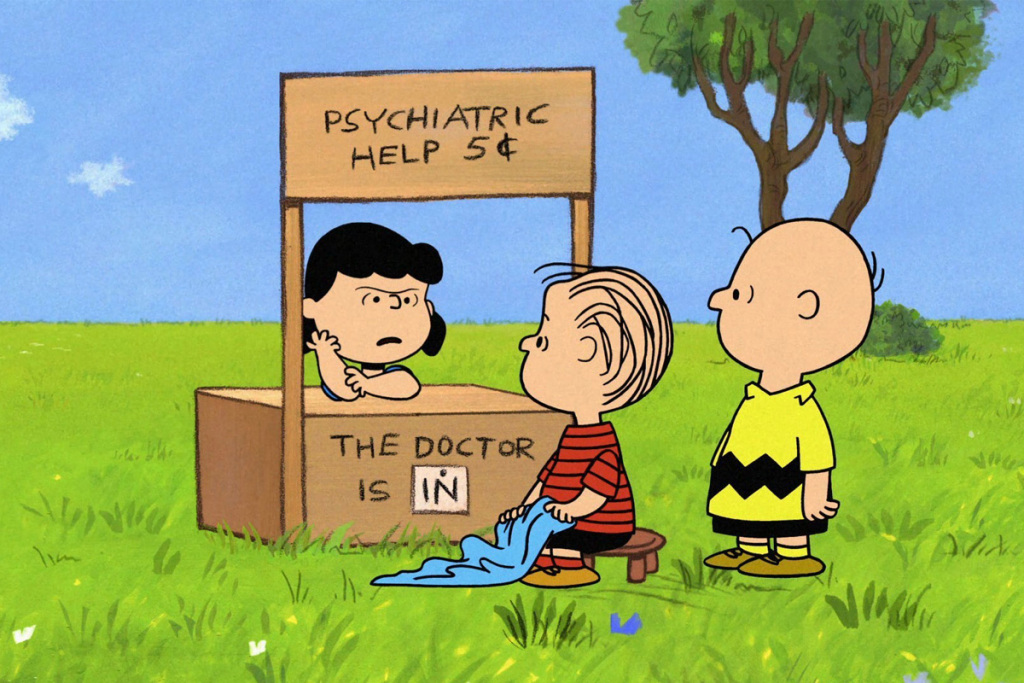
Best Films Involving Psychologists/Psychiatrists/Therapists

Week – 12 – Mental health in film

https://www.bing.com/images/search?view=detailV2&ccid=80R2KMbg&id=CE4726E9142EE1213B36A0FB8FC8D87E253999B4&thid=OIP.80R2KMbgL7XXD0Lp5HEYHAHaE8&mediaurl=https%3a%2f%2fuproxx.com%2fwp-content%2fuploads%2f2015%2f09%2flucy-peanuts-booth.jpg%3fw%3d1024&cdnurl=https%3a%2f%2fth.bing.com%2fth%2fid%2fR.f3447628c6e02fb5d70f42e9e471181c%3frik%3dtJk5JX7YyI%252f7oA%26pid%3dImgRaw%26r%3d0&exph=683&expw=1024&q=Peanuts+Lucy+Booth&simid=608054896960742106&FORM=IRPRST&ck=51EB37BE46F930484798B5DD48EC32FC&selectedIndex=9&ajaxhist=0&ajaxserp=0

Below is a link to IMB’s list of 37 films about mental health.

https://www.imdb.com/list/ls008570084/

Digital Research Project

For my digital research project I research Elizabeth Packard and her institutionalization at the hand of her husband, Theophilus Packard. Elizabeth Packard was sent to the Illinois State Asylum after an incident of expressing differing religious beliefs than that of her husbands. That event caused her to be locked in the asylum for three years under the control of Dr. McFarland. After her release at the hand of her son, she went to trial against her husband and was deemed sane by the court. She then spent the remainder of her life passing legislation for women’s and patient rights.

css.php