Digital Music

The rise of the internet in the 1990s and 2000s meant that a new landscape to buy, sell, and listen to music opened up. People started experimenting with music downloading and streaming as early as the 1980s. One example is Frank Zappa who sent music over cable networks for consumers to record onto cassettes.1 Another is Jim Griffin who in 1994 gave subscribers of CompuServe the chance to download an Aerosmith track to their computers.2 The issue that initially prevented digital music from taking off was that file sizes for music at the time were far too big for computer hard drives to handle.3

The mission to solve this issue was taken up by a German, Karlheinz Brandenburg, who in 1993 got his algorithm for digital music, the MP3, approved by the Motion Picture Experts Group (MPEG).4 MP3s allowed for mass use of digital music by reducing the size of the file, but to do this, the algorithm removes excess sounds that aren’t as detectable by the human ear compared to louder parts of the track.5 Compared to the compact disc (CD), the MP3 largely reduced the size of music, allowing consumers to store more music than ever before. Consumers could now download music from the internet and even from their own CDs. MP3s were very popular among young people for reasons very similar to why people loved the cassette. You could compile your own set of music personalized to you and take it wherever you wanted to go. The edge MP3s had over cassettes in the 90s and 2000s was that it was easier, could hold more, and, like the CDs, more long-lasting in sound quality compared to the cassette.

  1. Howie Singer, and Bill Rosenblatt. “Downloads.” In Key Changes. New York: Oxford University Press, 2023. https://doi.org/10.1093/oso/9780197656891.003.0008. ↩
  2. Howie Singer, and Bill Rosenblatt. “Downloads.” In Key Changes. ↩
  3. Howie Singer, and Bill Rosenblatt. “Downloads.” In Key Changes. ↩
  4. Howie Singer, and Bill Rosenblatt. “Downloads.” In Key Changes. ↩
  5. Howie Singer, and Bill Rosenblatt. “Downloads.” In Key Changes. ↩

Compact Discs

The compact disc (CD) was developed simultaneously by Royal Philips and Sony in the late 1970s and then was introduced to the public in 1982.1 In creating the CD, the companies wanted to provide consumers with a product that could hold more minutes of listening time compared to the cassette.2 What set the CD apart from something like the record or the cassette was that it used the concept of having groves that you would find one a vinyl record or tape, but developers reduced the size and digitized the groves using Pulse Code Modulation (PCM).3 Sony also released the first ever CD player, contributing to it being the most successful audio technology by the 1990s.4

The CD rivaled the cassette in the height of the cassettes popularity with the introduction of the Walkman, also in the late 1970s. The CD had the characteristics people loved about the cassette: it was portable, simple to use, and allowed users to have more control over their listening experience. In addition to this, the CD had a better, more clear sound and was able to maintain it’s original sound longer than the cassette or record.5 CDs became a major money maker for this corporations, becoming more very popular, but seeing as cassette sales still remained largely successful throughout the 1980s and 90s6, they ultimately didn’t replace the cassette entirely.

  1. James Hill. “A Brief History of Music Formats.” UnifiedManufacturing, January 16, 2022. https://www.unifiedmanufacturing.com/blog/a-brief-history-of-music-formats/. ↩
  2. Howie Singer, and Bill Rosenblatt. “Compact Discs.” In Key Changes. New York: Oxford University Press, 2023. https://doi.org/10.1093/oso/9780197656891.003.0007. ↩
  3. Howie Singer, and Bill Rosenblatt. “Compact Discs.” In Key Changes. ↩
  4. Howie Singer, and Bill Rosenblatt. “Compact Discs.” In Key Changes. ↩
  5. Howie Singer, and Bill Rosenblatt. “Compact Discs.” In Key Changes. ↩
  6. Refer to Success of the Cassette: The Walkman ↩

Success of the Cassette: The Walkman

The cassette was revolutionary in audio and recording technology due to its compact size and mobility capabilities. Compared to the radio, cassettes gave music listeners more control over the music they listened to, and made it more practical to listen to your favorite album or artist on the go. The mobility of the cassette is largely what made it so successful, which was only elevated by the invention of the Sony Walkman in 1979.1

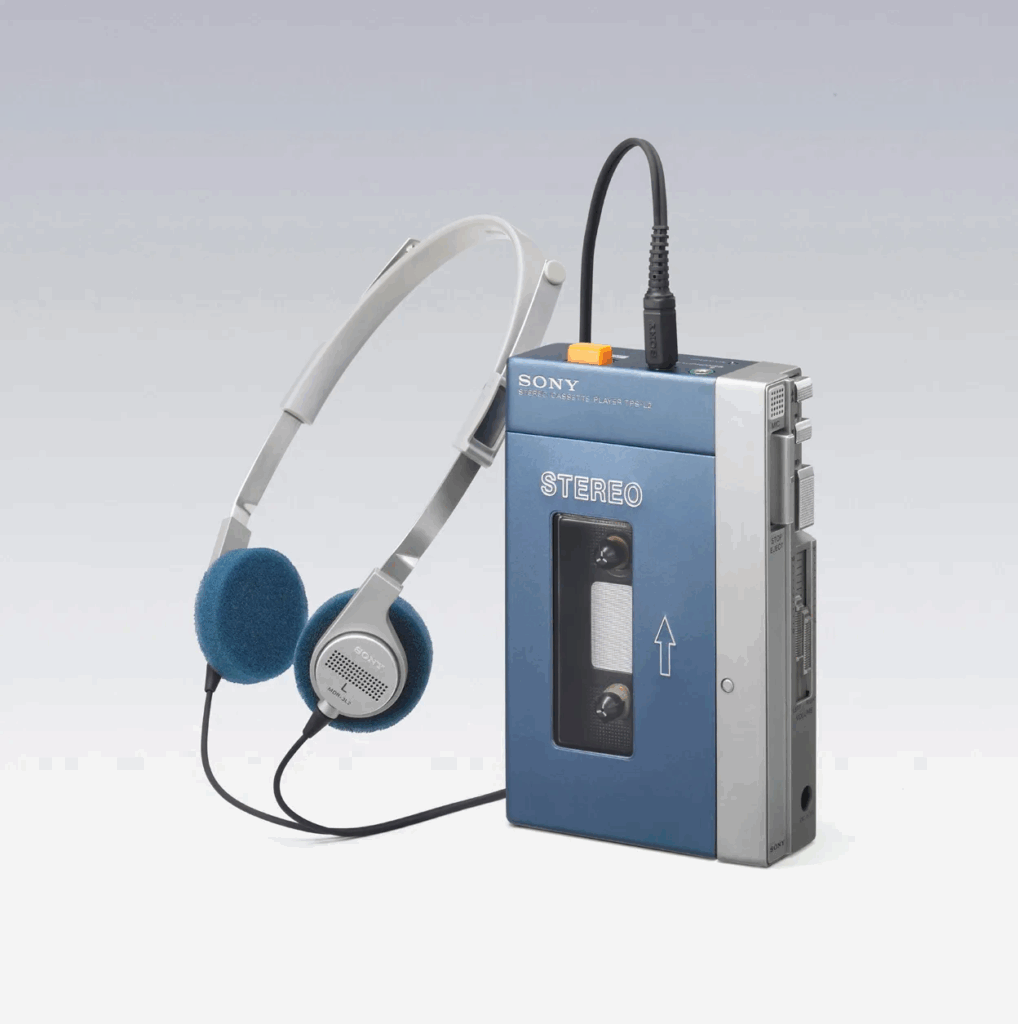
The Sony Walkman, “TPS-L2” model

The Walkman is just about the size of a compact cassette and is accompanied by a pair of headphones for users to listen to their music individually, on the go. 

The Walkman was created by Sony chairmen Masaru Ibuka and Akio Morita who saw an open market for portable music listening devices due to the fact that before 1979 the main ways of listening to cassettes were home or car stereo systems.2 The original version of the Walkman (‘TPS-L2’) set itself apart from the conventional tape recorder because it used stereo circuits and light weight headphones, which offered music listeners the opportunity to create a unique, individual music-listening experience.3 It was a huge success all across the globe, selling 186 million units of the cassette version from it’s launch in July 1979 to 1998.4 The Sony Walkman made cassettes that much more successful and solidified them as an iconic piece of music technology in the twentieth century.

  1. David Pierce. “Sony’s Walkman Turns 35: The Gadget That Started It All.” The Verge. July 1, 2014. https://www.theverge.com/2014/7/1/5861062/sony-walkman-at-35. ↩
  2. Sony Corporation. “Sony Celebrates Walkman® 20th Anniversary.” Sony Group Portal, July 1, 1999. https://www.sony.com/en/SonyInfo/News/Press/199907/99-059/. ↩
  3. Sony Corporation. “Sony Celebrates Walkman® 20th Anniversary.”  ↩
  4. Sony Corporation. “Sony Celebrates Walkman® 20th Anniversary.”  ↩

Success of the Cassette: The Walkman

The cassette was revolutionary in audio and recording technology due to its compact size and mobility capabilities. Compared to the radio, cassettes gave music listeners more control over the music they listened to, and made it more practical to listen to your favorite album or artist on the go. The mobility of the cassette is largely what made it so successful, which was only elevated by the invention of the Sony Walkman in 1979.1

The Sony Walkman, “TPS-L2” model

The Walkman is just about the size of a compact cassette and is accompanied by a pair of headphones for users to listen to their music individually, on the go. 

The Walkman was created by Sony chairmen Masaru Ibuka and Akio Morita who saw an open market for portable music listening devices due to the fact that before 1979 the main ways of listening to cassettes were home or car stereo systems.2 The original version of the Walkman (‘TPS-L2’) set itself apart from the conventional tape recorder because it used stereo circuits and light weight headphones, which offered music listeners the opportunity to create a unique, individual music-listening experience.3 It was a huge success all across the globe, selling 186 million units of the cassette version from it’s launch in July 1979 to 1998.4 The Sony Walkman made cassettes that much more successful and solidified them as an iconic piece of music technology in the twentieth century.

  1. David Pierce. “Sony’s Walkman Turns 35: The Gadget That Started It All.” The Verge. July 1, 2014. https://www.theverge.com/2014/7/1/5861062/sony-walkman-at-35. ↩
  2. Sony Corporation. “Sony Celebrates Walkman® 20th Anniversary.” Sony Group Portal, July 1, 1999. https://www.sony.com/en/SonyInfo/News/Press/199907/99-059/. ↩
  3. Sony Corporation. “Sony Celebrates Walkman® 20th Anniversary.”  ↩
  4. Sony Corporation. “Sony Celebrates Walkman® 20th Anniversary.”  ↩

The Inventor: Lou Ottens

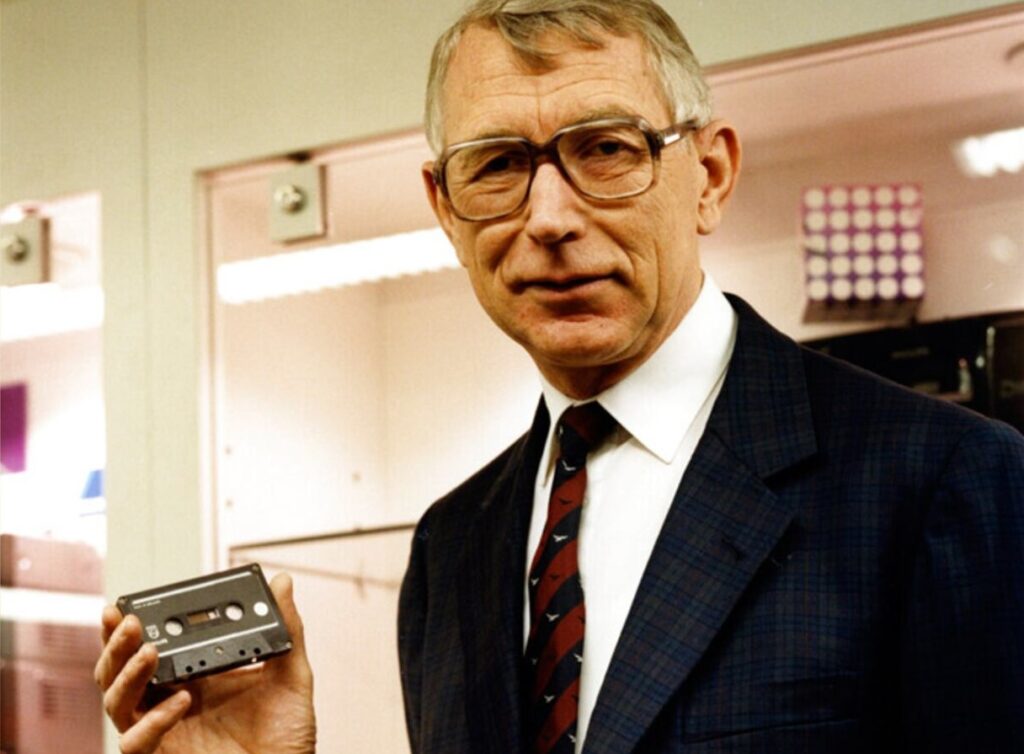
The primary inventor of the Cassette Tape was Lou Ottens, and he worked with a group of young inventors. He makes it known that he wasn’t the only one who made the Cassette Tape possible and acknowledges that it was a team project. 1 Ottens joined Philips in 1952 and was picked to head its new products development division in 1960. A year later, the group had invented the compact cassette as a plastic-encased, portable version of a reel-to-reel recording system. The group of engineers mainly consisted of people with experience in the design or manufacture of record-playing and tape-recording equipment in Eindhoven-based groups.2 This allowed him to have a group to work together on the project with, and provided a group of inventors to rely on from the laboratories and factories of the research centre in Eindhoven. However, before the group’s development of the Cassette Tape there was another project that influenced its development. This invention was the first battery-driven reel-to-reel portable recorder, the EL 3585 came out in 1958, and became very successful.3 It made the group confident that there would be a big market for a smaller, pocket-able battery recorder.

Lou Ottens poses for a camera, holding a cassette tape in his hand.
Lou Ottens, inventor of the cassette tape, 1988. Image via Phillips Archive.

There are a large variety of major factors to get the product implemented by Philips. The group headed by Ottens had a specific goal in mind to get their product proposal accepted. The product’s development group aimed to lower the price range of the gramophone and recording market.4 This made it so that new product proposals sent to Philips would propose products that were cheap, small, have a low battery consumption, as well as allow for appropriate reproduction quality. These factors influenced the innovation and development of the Cassette Tape moving in toward the size and design that would allow it to be as portable and cheap aiding its spread in popularity through the United States. Ottens’ team wanted the final product to be small enough to fit in a pocket and easy enough to use on preexisting machines that the company already developed.5 The group was also fueled by different models and developments of competing countries’ inventions. “The Japanese competition on the market consisted of small, rim drive type reel-to-reel recorders of inferior reproduction quality and had a battery life of only a few hours.”6 Ottens group worked towards ideas for a new replacement of the EL 3585. This led to the group submitting different proposals for the cartridges, tape sizes, and tape speeds. Ottens and his team wanted a final product small enough to fit in a shirt pocket and easy to use on machines the company also developed.

  1. Taylor and Smoot. “Cassette: A Documentary Mixtape.” ↩
  2. Dormon, “Compact Cassette Supremo Lou Ottens Talks to El Reg.” 1. ↩
  3. Ibid. ↩
  4. Ibid. ↩
  5. Miel. “Obituary: Compact Cassette Tape Inventor Lou Ottens.” ↩
  6. Dormon, “Compact Cassette Supremo Lou Ottens Talks to El Reg.” 1. ↩

Introduction

Welcome to the exploration of IMAX! This website is the product of Ava Bredehoeft, Isabella Ellenberger, and Oliver Marcel.

Throughout this website we will take a deep dive into what IMAX is all about, the makings of it and what came before, competitors and alternatives to the technology, and how it has interacted with society.

We will explore from the first invention of film to crisp visuals seen in modern movie theaters today. Technology continuously reshapes the way we experience storytelling. Through this stands IMAX, a product of technology that has redefined the boundaries of the moviegoer experience. Having the power to connect artist and audience through high tech projectors, sound equipment, and unique theater designs to create the ultimate viewer experience.

We hope you enjoy our website and learn more about the creation and experience of IMAX.

Thank you for visiting our site!

Home

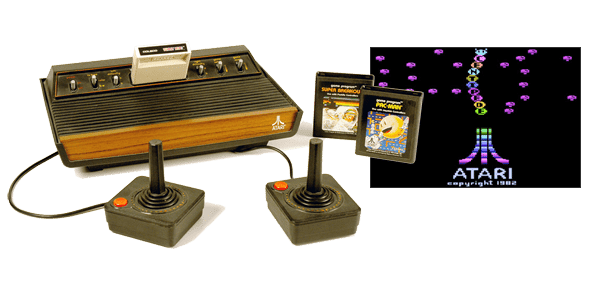
Welcome to Our Project: The Atari 2600.

Made by: Caitlyn Edwards, Izabella Martinez, and David Young. 

Welcome to our website! We are a group of students exploring the history and cultural impact of the Atari 2600, one of the most revolutionary pieces of consumer technology in American history. Released in 1977, the Atari 2600 wasn’t just a video game console, it was a change to how people interacted with technology inside their own homes. It brought arcade-style fun into the living room and helped launch what would become the global video game industry. 

This website will take you through how the Atari 2600 was invented, how it was advertised, how it changed American family life and entertainment, and the legacy it still has today. Use the menu above to explore each section of our project!