Project Outline

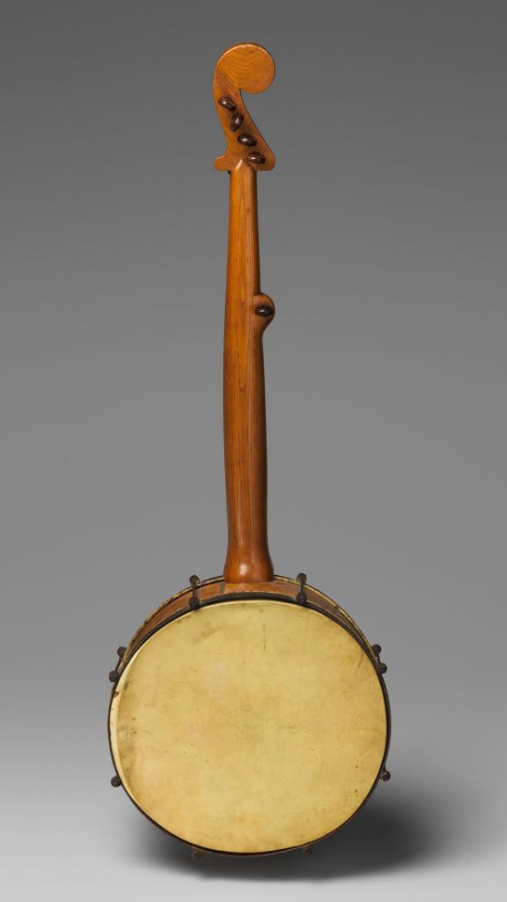
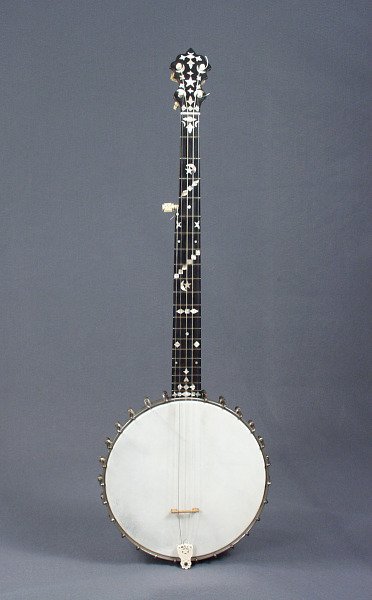
We will separate our website into multiple pages based on the section of the project, for instance we will have separate pages for the proposal, outline, and documentary. We will also have the main blog as the homepage. We will have a page containing a gallery of historical banjos as well as modern banjos, which the viewer can scroll down to get a visual sense of how the instrument has evolved over time.

Our documentary page will have the documentary featured, but we will also include a summary of the contents of the documentary beneath it to provide some background information and a general idea of what will be discussed.

We might also include a page of famous banjo players, each with a short description about the musician’s life and banjo technique as well as an analysis of how their race has played a role in their fame. Most famous banjo players are white. The gallery pages will be included on a sidebar navigation menu, while the project timeline related pages will be linked on the top of the website. 

Plan for our Documentary

For the documentary short, we will not be using AI in any way.

We will open the documentary with our introduction, in which we will go over what the American banjo is using a voiceover. This section will show images of the modern popular banjo and pictures of people playing them.

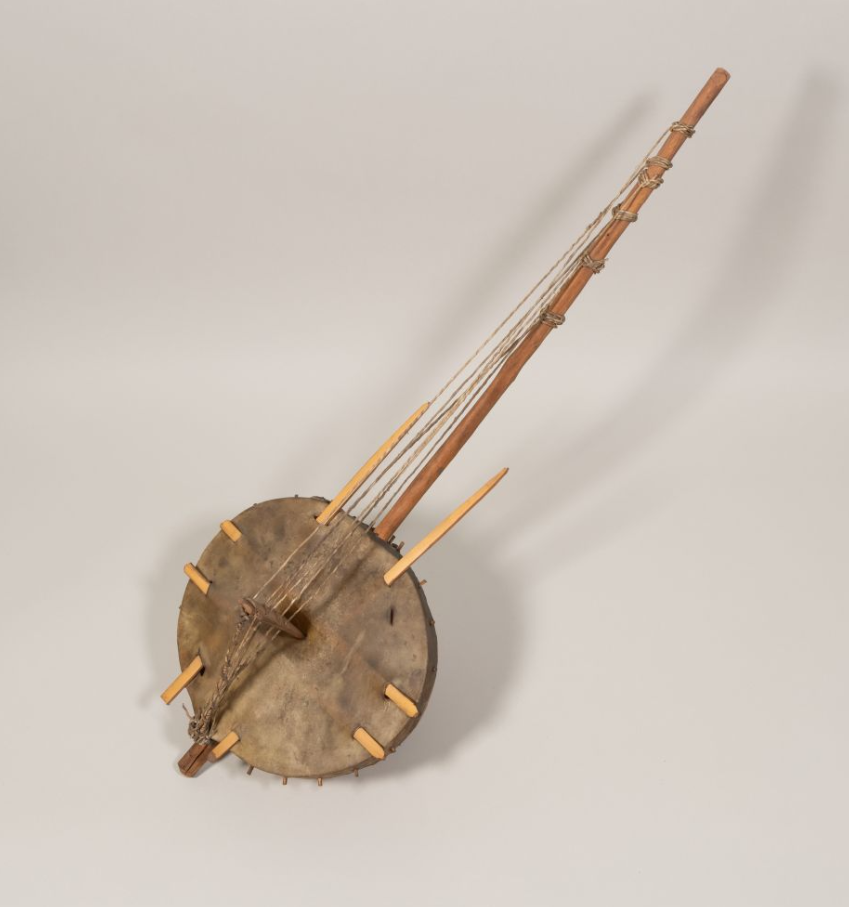
We will then interrupt this narrative with visiting how the banjo became what it is today, its roots in Africa. We will discuss the American Banjo’s origins in Africa, showing historical images and talk about how enslaved people introduced the instrument to the Americas in the colonial era. If we can find any recordings of plantation banjo songs, we can have that playing in the background while we discuss the history.

Next, we will transition to a new section featuring the banjo’s spread to white America and overall appropriation by white people. We will show political cartoons/ images of minstrel shows, discussing racism that was associated with the instrument.

The American Banjo was perceived by most of the population as a low-class instrument and was not taken seriously. It was primarily a way to mock Black culture, rather than to make popular music.

We will discuss the process in which the banjo became accepted into larger society, especially popular with rural white America. We will dive into the value of the American Banjo in bluegrass and country music, including recordings and videos of popular white banjo music today, demonstrating that shift that took place.

After that section of the documentary, we will transition to section about banjo alternatives in Europe, discuss how these forms emerged out of minstrel shows in the United States.

Finally, we will end our documentary with a conclusion, including an overview of the American Banjo’s impact on our culture today.

Images we will use:

“Iconic image” can be of Earl Scruggs, an ultra famous (white) banjo player who popularized a new style for playing the instrument. We will analyze how Scruggs, along with countless other white American country musicians, have become the face of the banjo despite its origins having been invented by enslaved Africans. 

“The Humble Genius Of Earl Scruggs.” Southern Songs and Stories, 2023. https://www.southernsongsandstories.com/blog/2023/1/23/the-humble-genius-of-earl-scruggs 
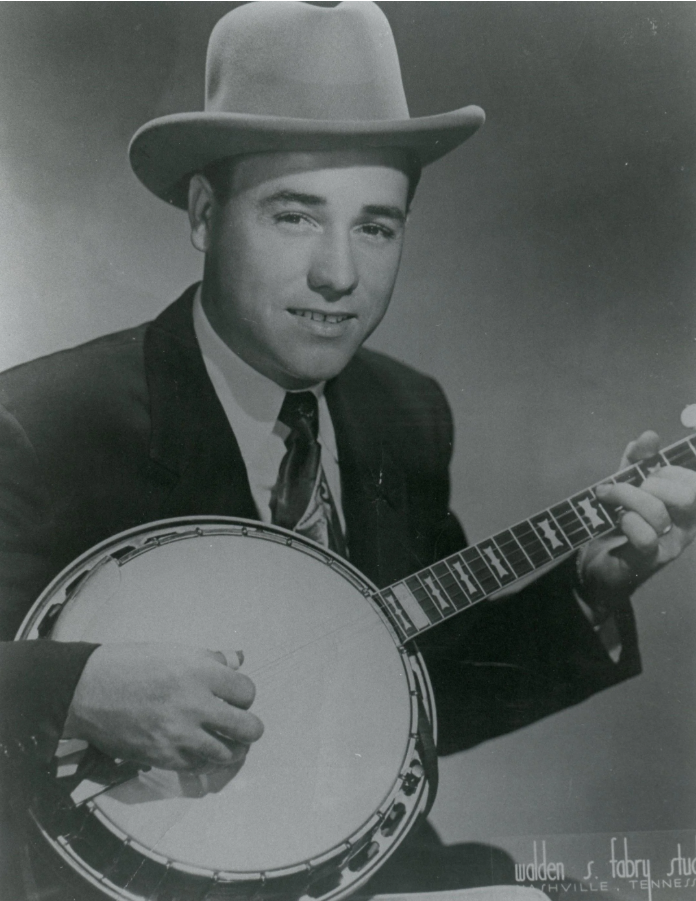
Grossman, Sid. n.d. Pete Seeger Photograph. National Portrait Gallery, Smithsonian Institution. Accessed October 16, 2025. https://www.si.edu/object/pete-seeger:npg_NPG.94.85.

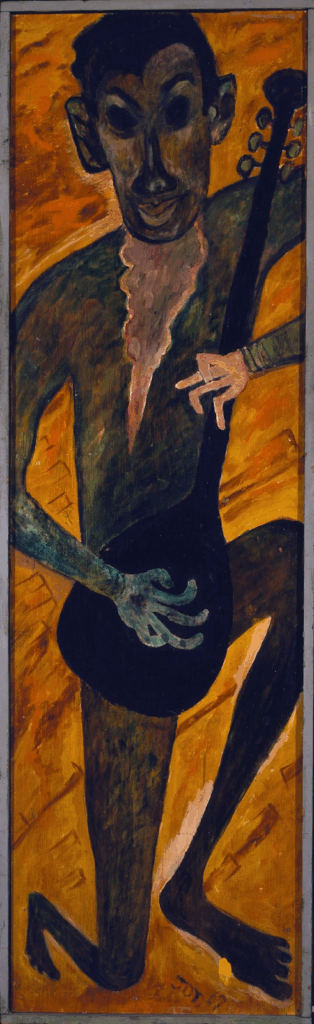
Serl, John. n.d. Male Figure Oil painting on board. Smithsonian American Art Museum, Gift of Herbert Waide Hemphill, Jr. Accessed October 16, 2025. https://www.si.edu/object/male-figure:saam_1998.84.32.
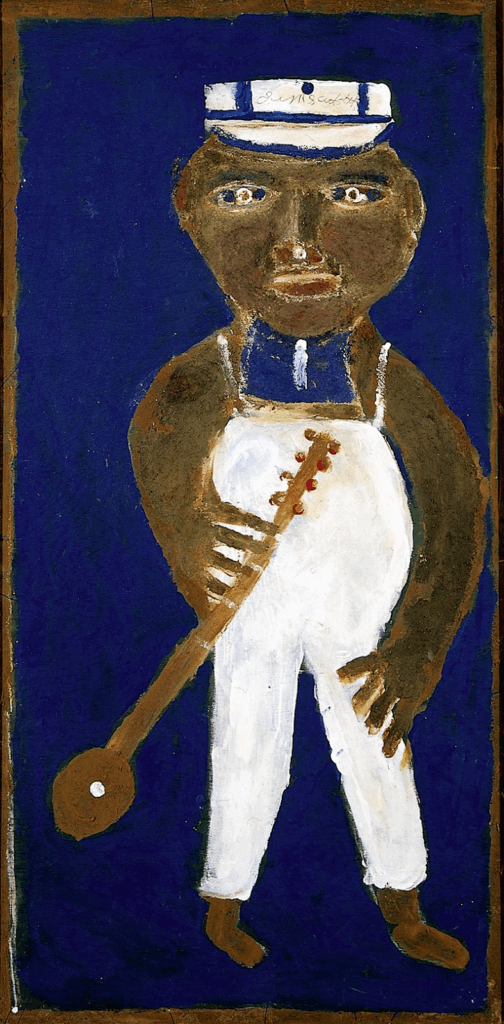
‌Lee Sudduth, Jimmy. n.d. Self-Portrait with Banjo Mixed media: mud, paint, and vegetable matter on board. Smithsonian American Art Museum Collection. Accessed October 16, 2025. https://www.si.edu/object/self-portrait-banjo:saam_1997.124.40.
Hoddu (Xalam). late 19th century. Wood, skin, L. 48.5 cm; W. 9 cm; H. 8.5 cm. The Metropolitan Museum of Art. Open: The Metropolitan Museum of Art. Artstor. https://jstor.org/stable/community.34719025.
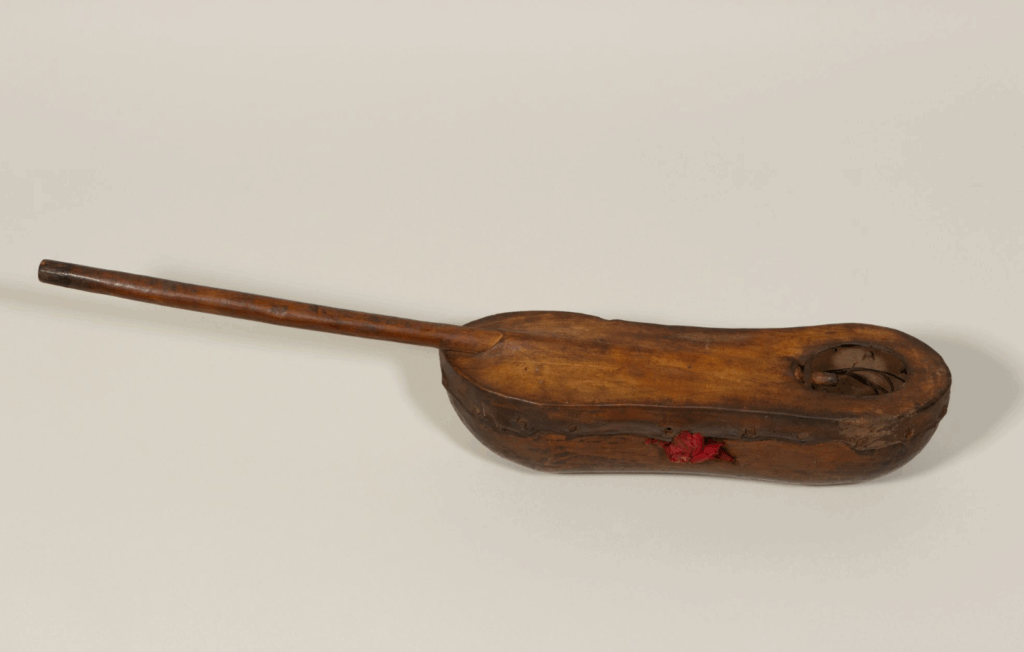
Hoddu (Xalam). late 19th century. Wood, skin, 65cm x 12cm x 15.5cm. The Metropolitan Museum of Art. Open: The Metropolitan Museum of Art. Artstor. https://jstor.org/stable/community.34719026

Sora Ngoni (Simbingo). 19th century. Gourd, skin, wood, leather, 88cm x 31cm x 27cm. The Metropolitan Museum of Art. Open: The Metropolitan Museum of Art. Artstor. https://jstor.org/stable/community.27235563.
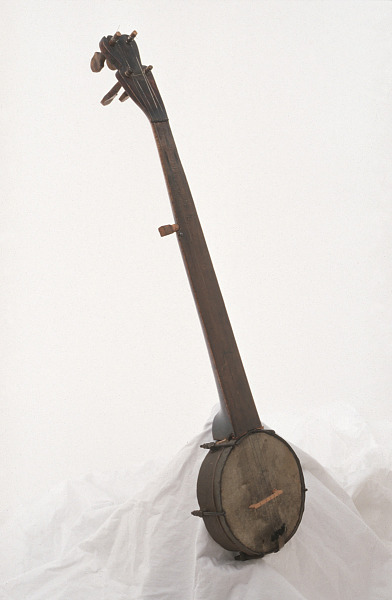
“This banjo was made by an unknown maker in Bristol, Tennessee during the 19th century. It is a Five-String Fretless Banjo. The banjo has a commercial neck cut down and joined to a 4 bracket hoop of welded wrought iron”.

American Five-String Fretless Banjo | Smithsonian Institution.” 2025. Si.edu. 2025. https://www.si.edu/object/american-five-string-fretless-banjo:nmah_605682.
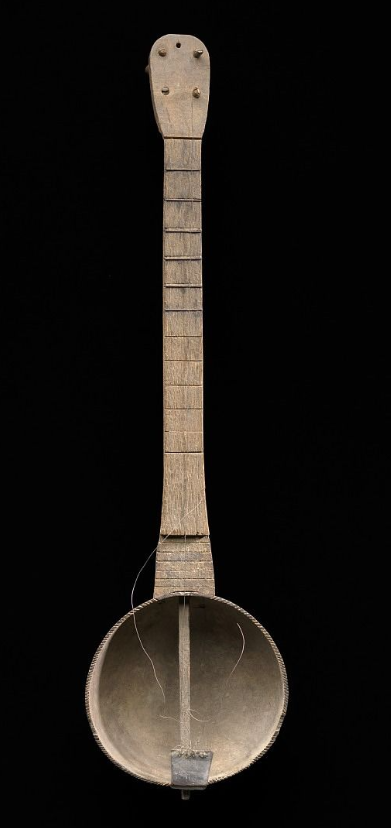
Created by Unidentified. Gourd Head Banjo. ca. 1859. Gourd with wood and metal, H x W x D: 7 × 26 1/2 × 2 1/2 in. (17.8 × 67.3 × 6.4 cm). National Museum of African American History and Culture; Collection of the Smithsonian National Museum of African American History and Culture. https://jstor.org/stable/community.31886663

Double Head Fretless Banjo. ca.1850. Various woods, metal hardware, calfskin head, calf gut strings, 41 in. Length x 5 in. Depth x 14 in. Diameter. The Metropolitan Museum of Art. Open: The Metropolitan Museum of Art. Artstor. https://jstor.org/stable/community.39752451

“This banjo was made by Samuel Swain Stewart Co. in Philadelphia, Pennsylvania, about 1889. It is a Five-String Banjo, serial #6682, with a metal-covered wooden hoop, 26 metal brackets, dark wood veneered fretboard and peghead, with shell inlay, rosewood neck, carved heel, and friction pegs.”

“Stewart Five-String Banjo | Smithsonian Institution.” 2025. Si.edu. 2025. https://www.si.edu/object/stewart-five-string-banjo:nmah_605689.
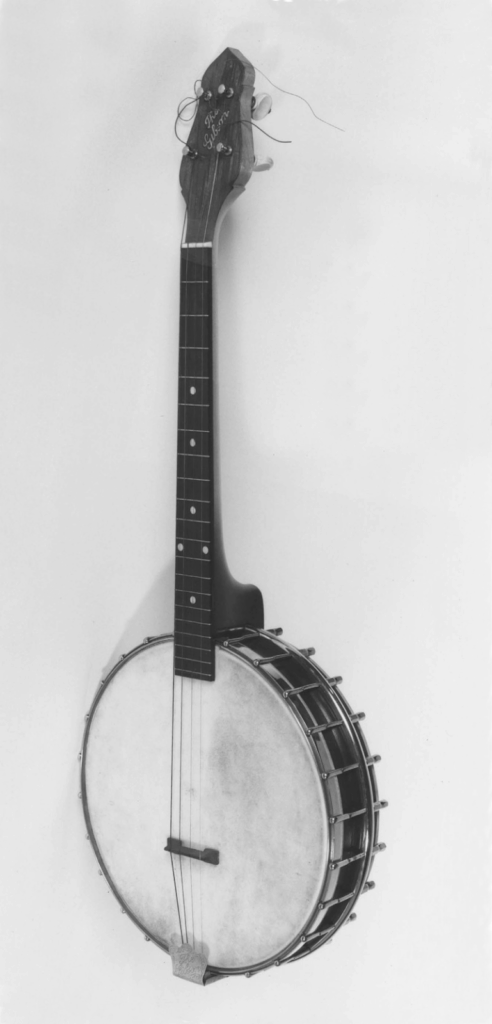
Made in 1923

“Gibson Tenor Banjo | Smithsonian Institution.” 2025. Si.edu. 2025. https://www.si.edu/object/gibson-tenor-banjo:nmah_606326.
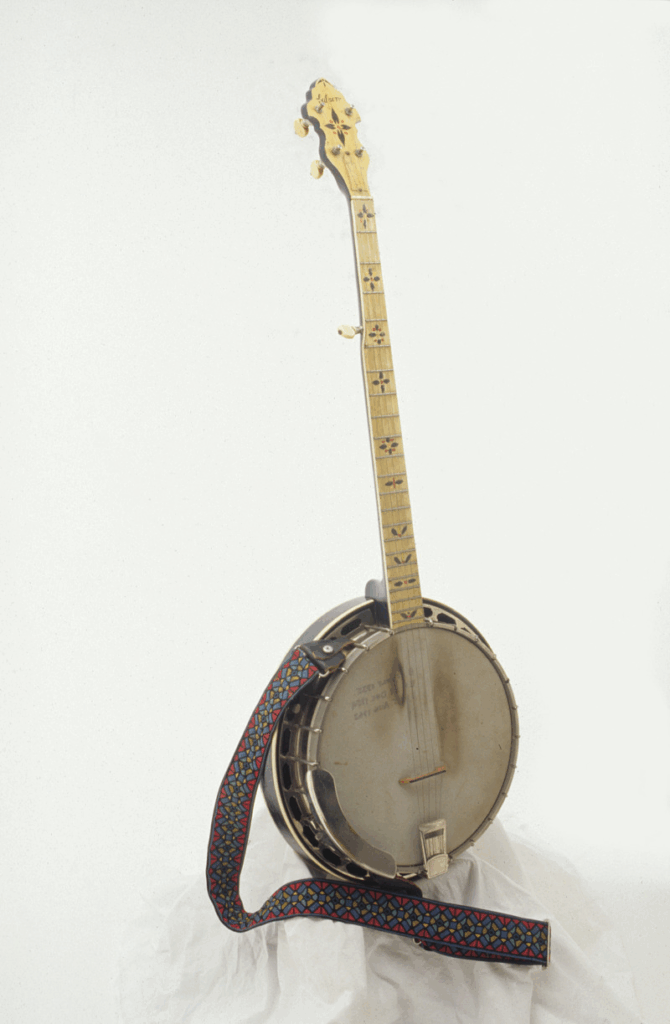
“This banjo was made by Gibson Inc. in Kalamazoo, Michigan around 1935. It is a Five-String Banjo, with 22 frets, 24 brackets, pearloid inlaid on fingerboard and back of resonator, and a maple hoop. In a 1934 Gibson catalog, this “RB-11” style banjo sold for $60.00.”

Gibson Five-String Banjo, Used by Wade Ward | Smithsonian Institution.” 2025. Si.edu. 2025.https://www.si.edu/object/gibson-five-string-banjo-used-wade-ward:nmah_605688.
Project Outline

WordPress Outline

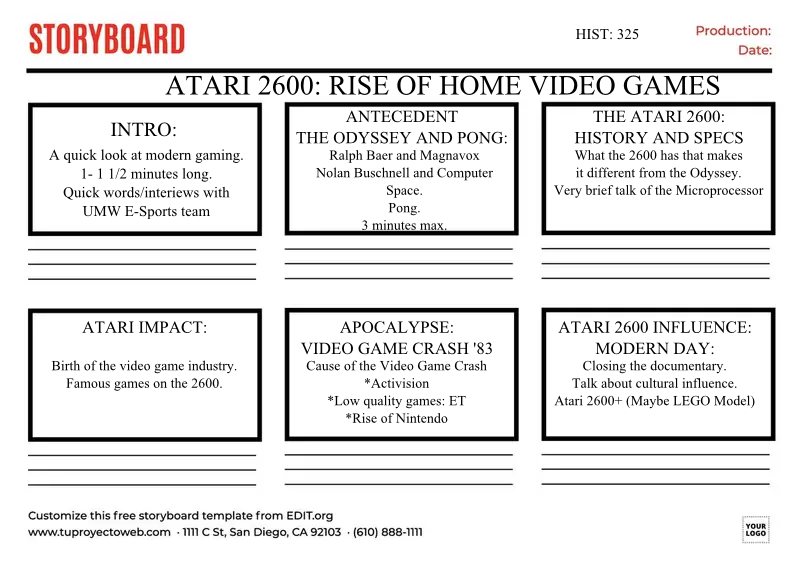
Our WordPress project will focus on the development, impact, and advertising of the Atari 2600, one of the most important early home gaming consoles. Our site will include:
Home Page: A short introduction of us and the Atari 2600, explaining what it is, why it was important, and how it changed entertainment in America. 

Proposal and Annotated Bibliography: Separate page used to house these documents for viewing.

Project Outline: Separate page used to house this document for viewing.

Documentary: Separate page used to house our documentary for viewing.

Time Line: A timeline will be utilized to visually organize the key events in the Atari 2600’s history. It will show the console’s major milestones stemming from its antecedents all the way through its impact on modern technology and its prevalence in contemporary media. The timeline will house the major beats of our project and documentary all in one place. It will be created using TimelineJS and will be housed in our wordpress as its own page for people to interact with.

Development: How the Atari 2600 Came to Be.: This page will explain how the console was created, from early games like Pong and the Magnavox Odyssey to Atari’s design breakthroughs like using game cartridges. It will include short bios of key developers such as Nolan Bushnell and Joe Decuir. Photos of early prototypes, diagrams and short video explaining its creation. 

Advertising and the Public: Who was the Atari 2600 for?: This page will study how Atari was advertised to families and young players in the 1970s and 1980s. It will feature commercials like “Have You Played Atari Today?” and magazines ads showing how gaming became a popular home activity. Media for this page will include advertisements, commercials, and brief analysis of slogans and imagery used to market the Atari 2600 as a consumer product. 

Impact and Effects (Then and Now): This section will look at how the Atari 2600 affected society and technology. It will discuss its role in family entertainment, pop culture, the rise of gaming culture, and its influence on later consoles. It will also mention the 1983 video game crash and the system’s lasting legacy. Media for this page will include. Charts, family photos, magazine clippings, and gameplay revival. It will focus on the legacy and modern influence of this artifact of technology.

Media Plan: 

We will be using images of the console, ads, gameplay videos, charts of sale, LEGO set, and clips from documentaries such as Modern Marvels: 70’s Tech and Atari: Game Over. 

Documentary Outline

A rough idea (having also watched some documentaries of past projects).  Subject to edit and change.

Most research done from these sources (specific chapters):

DeMaria, Rusel. “Somebody’s Gotta Be First.” In High Score! Expanded, 32–46. CRC Press, 2019. https://doi.org/10.1201/9780429429910-3.

DeMaria, Rusel. “Landmarks of Electronic Game Prehistory.” In High Score! Expanded, 11–24. CRC Press, 2019. https://doi.org/10.1201/9780429429910-1.

DeMaria, Rusel. “Robot.” In High Score! Expanded, 103–11. CRC Press, 2019. https://doi.org/10.1201/9780429429910-26.

Outlines

Documentary outline.

Introduction : Introduce the western saddle

Background: Brief history of saddles and their use

Differences : What makes the western saddle different from english or other varieties.

Compare and contrast

Origin: go over the artifacts antecedents, and prior iterations of saddles.

Saddles through time

Invention: development of western saddles from South American saddles.

Trace development using patents, artwork, or other available means.

Interaction: Introduce how the western saddle interacts with and influences society and culture.

Possibly go over how saddles now are often built for show, or as an ornamental piece (but not all ways)

Include the decorated saddle image from our research.

 Alternatives: Discuss other saddle formats that could have taken the place of the western saddle but didn’t

Mention why the western saddle won out in this competition.

Conclusion: recollect main points and wrap up the documentary.

Invention Outline

  • Oldest saddle
    • Northwest Chinese saddle artifact
  • Show development over time
    • Other historic examples
  • Showcase 1600’s south american saddle
    • Closest antecedent to western saddle
  • Development
    • Highlight that many hands were involved in shaping the western saddle 
    • Often made unique to an individual’s wants by artisans in the west and south
    • Highlight certain features became more popular overtime such as horns and larger pads
    • Give examples of how these saddles progressed such as the pony express saddle
  • Conclusion
    • No single inventor
    • Shaped by communities and artisans and features were accepted or rejected over time.

Antecedents outline:

  1. In Saddles by Russell H. Beatie, we will use Chapters 9 (pp. 42–50) and 10 (pp. 50–57), as they provide important contextual information regarding the development of the antecedents of Western saddles. In addition, we will use selected passages from Chapter 15 (pp. 93–97, 112–118, 153–163) to explain the major parts of the saddle in the documentary.
  2. In Man Made Mobile: Early Saddles of Western North America, we will use the chapters “Horizons of the Western Saddle” by Richard E. Ahlborn (pp. 4–21), “Origins of Mexican Horsemanship and Saddlery” by Daniel F. Rubin de la Borbolla (pp. 21–39), and “Western Saddles Before the Cowboy” by James S. Hutchins (pp. 39–72), as they provide extensive information about the history of colonial, Mexican, and early types of Western saddles, along with their social and economic contexts.
  3. In United States Military Saddles 1812–1943 by Randy Steffen, we will primarily use Chapter 1, “The Walker Contract Saddle and Other Dragoon Saddles, 1812–1814” (pp. 3–17); Chapter 2, “Dragoon Saddles, 1833–1841” (pp. 17–33); and Chapter 3, “The Ringgold and Grimsley Saddles, 1844–1847” (pp. 33–49), as they discuss military antecedents to the Western saddle.
  4. We will also use the collection The Journals of Zebulon Montgomery Pike, with Letters and Related Documents, edited by Donald Jackson, as a primary source. Specifically, pages 85–89, where Zebulon Pike discusses contemporary saddles.
  5. Finally, we will include photographs from Man Made Mobile: Early Saddles of Western North America, specifically images of the estradiota (Figure 21), the jineta (Figure 17), and the comparison between the estradiota and jineta styles (Figure 14).

Polystyrene Storyboard

Food packaging, consumer use, and industrial applications.

Polystyrene Storyboard

Food packaging, consumer use, and industrial applications.

Polystyrene Outline

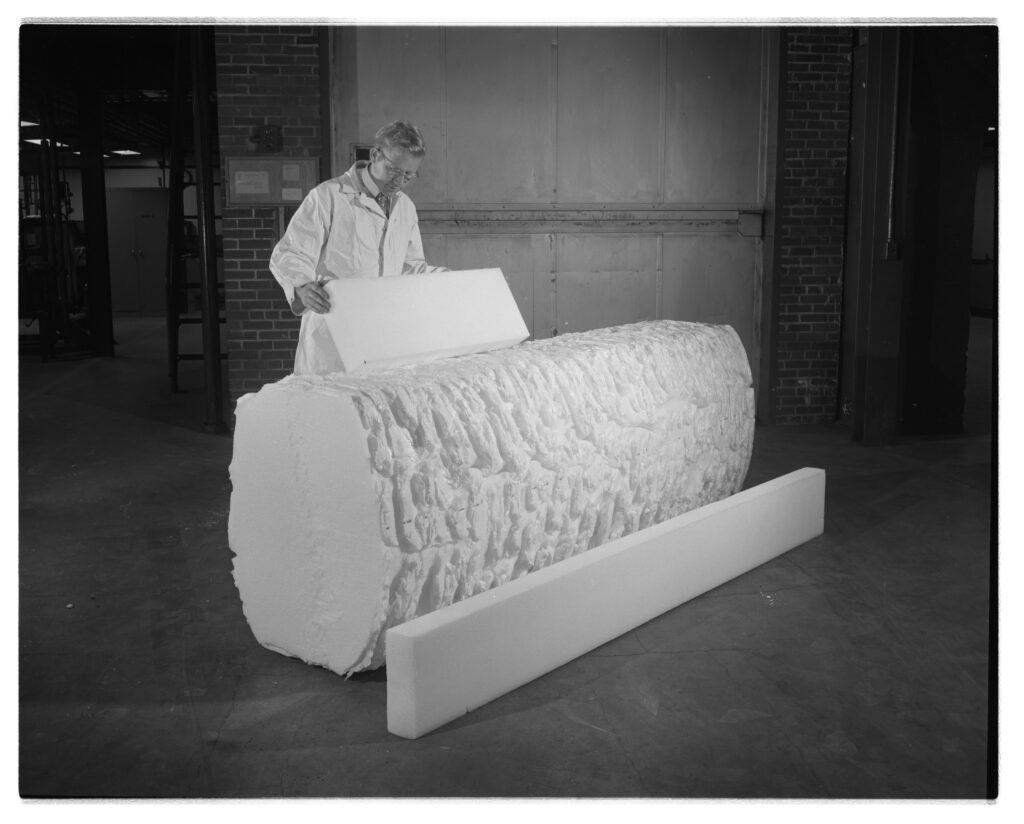
Current image: “Examining Pieces of Styrofoam at Dow Chemical Company.” 2025. Science History Institute Digital Collections. 2025. https://digital.sciencehistory.org/works/tx31qj223/viewer/pz50gw679.
“Examining Pieces of Styrofoam at Dow Chemical Company.” 2025. Science History Institute Digital Collections. 2025. https://digital.sciencehistory.org/works/tx31qj223/viewer/pz50gw679.

Documentary Outline

“Polystyrene: From War to Waste and Beyond”

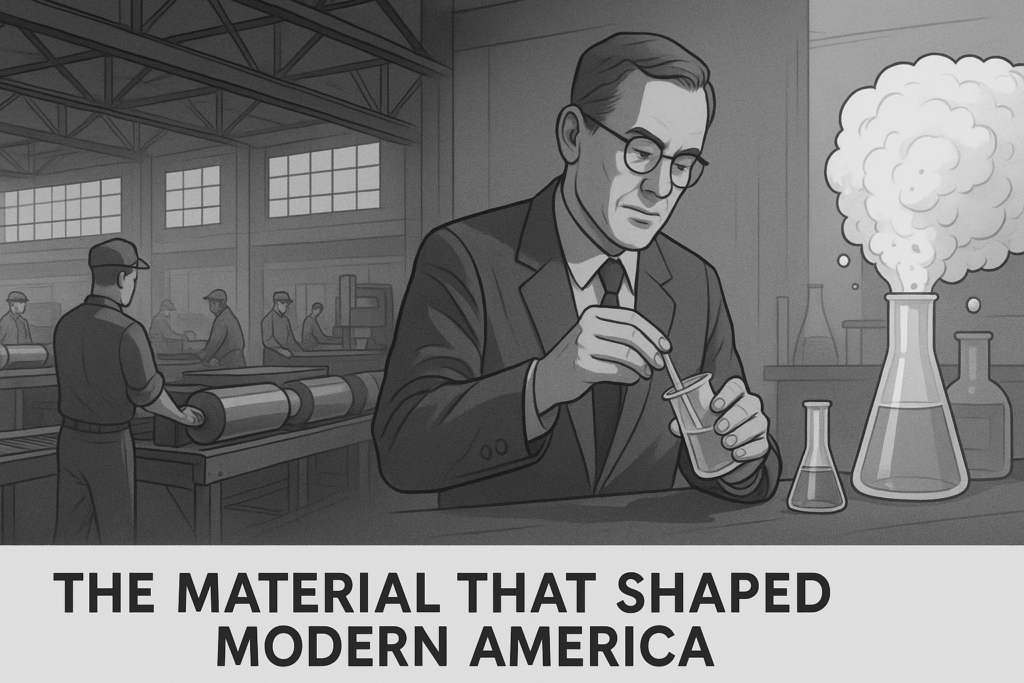
I. Introduction – The Material that Shaped Modern America

  1. Opening visual: Archival footage of WWII manufacturing lines and consumer packaging.
  2. Narration focus: Introduce polystyrene as a product of innovation, born from wartime necessity, that transformed industries and daily life.
  3. Context: Briefly trace discovery by Eduard Simon (1839) and refinement by Ray McIntire at Dow Chemical during WWII.
  4. Thesis statement: What began as a military innovation evolved into a ubiquitous material touching defense, safety, space exploration, and food preservation—leaving behind both cultural convenience and environmental consequence.

II. Military Applications – The Wartime Catalyst

  1. Historical background: WWII rubber shortages and search for substitutes.
  2. Focus: Ray McIntire’s accidental creation of foam polystyrene; adoption for insulation, flotation devices, and protective packaging of military equipment.
  3. Visuals: Wartime footage, factory production scenes, patent documents.
  4. Significance: Demonstrate how military research laid the foundation for postwar consumer adaptation.

III. Safety and Industrial Applications – Protecting Lives and Machines

  1. Examples: Safety helmets, construction insulation, impact-absorbent materials.
  2. Narration: Emphasize technological confidence in plastics as durable, lightweight, and affordable.
  3. Visuals: Construction sites, laboratory drop tests, 1950s safety advertisements.
  4. Cultural connection: The postwar belief that synthetics symbolized progress and security.

IV. Packaging Revolution – The Consumer Boom

  1. Theme: How polystyrene became central to the American consumer economy.
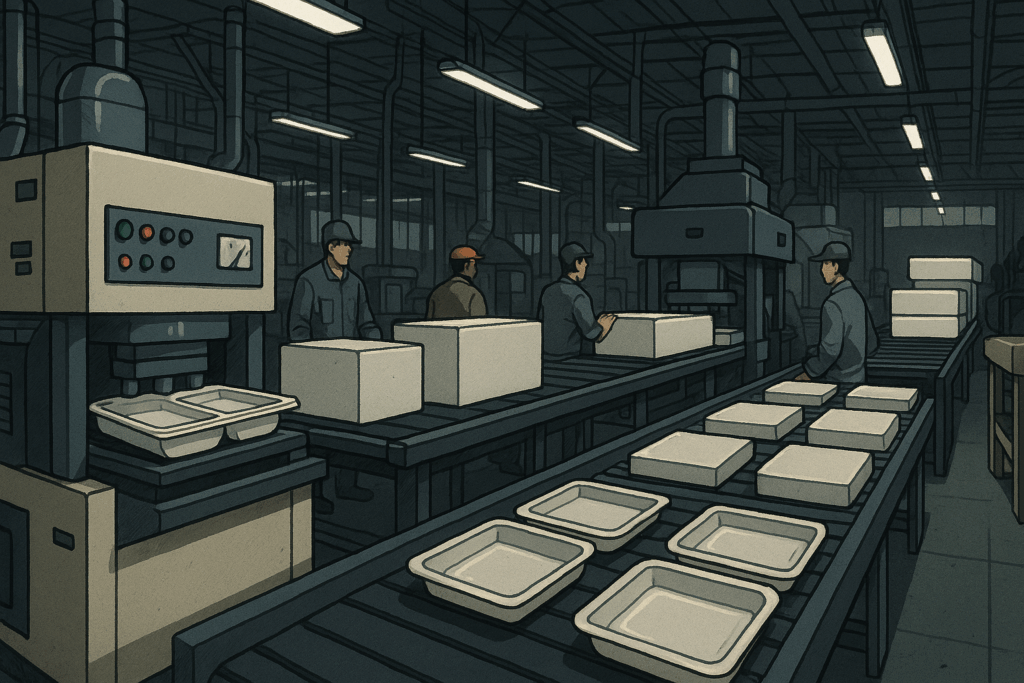
  2. Examples: Disposable cups, trays, and shipping containers; rise of fast-food convenience.
  3. Narration cue: Link mass production to postwar prosperity and domestic culture.
  4. Visuals: 1950s-1960s commercials, supermarket aisles, assembly lines.

V. NASA and the Space Age – Polystyrene Beyond Earth

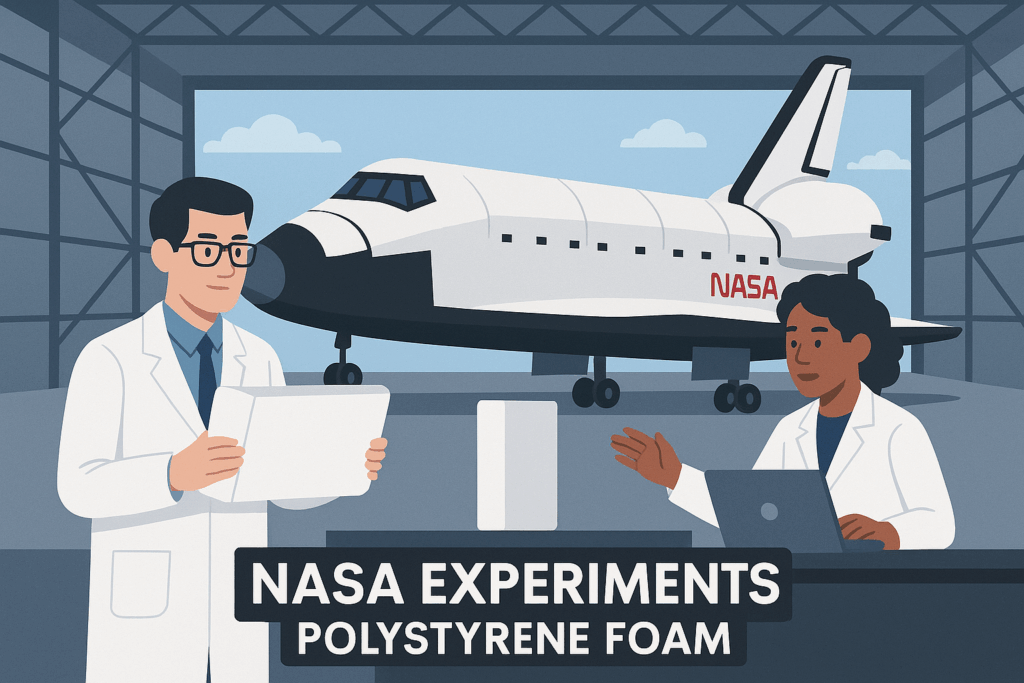
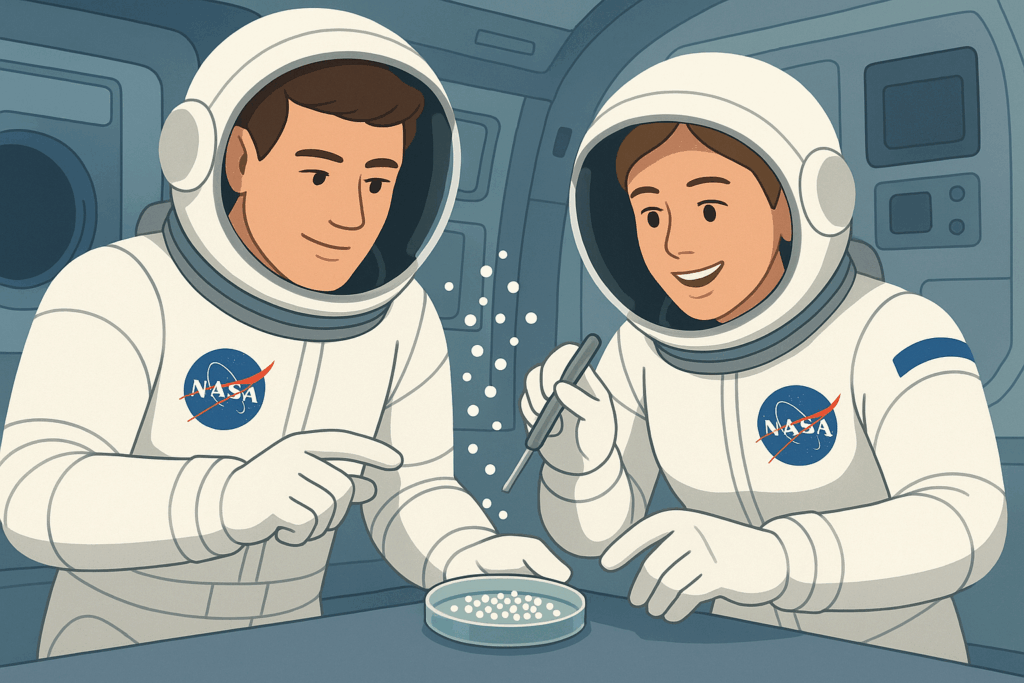
  1. Focus: Use in spacecraft insulation, lightweight instrument housings, and experimental materials for zero-gravity environments.
  2. Visuals: NASA archival footage, Apollo and Shuttle imagery.
  3. Narration: Connect technological ambition with the adaptability of synthetic materials.
  4. Broader point: Innovation in one field accelerated breakthroughs across others—symbolizing American ingenuity.

VI. Food Preservation – Extending Shelf Life

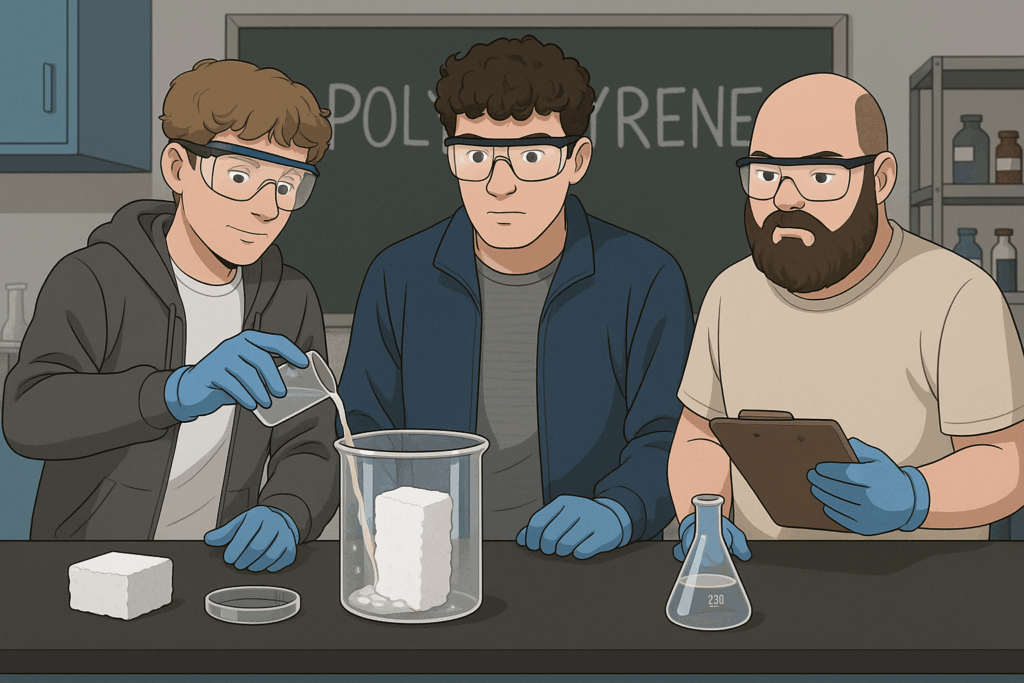
  1. Science segment: Explain insulating and non-reactive properties that revolutionized refrigeration, food transport, and take-out culture.
  2. Visuals: Laboratory experiments, refrigerators, early microwavable containers.
  3. Cultural tie: The convenience economy and the emergence of “disposable dining.”

VII. Health and Environmental Concerns – The Price of Progress

  1. Key issues: Styrene exposure, toxicity studies, worker safety regulations.
  2. Narration: Introduce debates over microplastics and long-term health impact.
  3. Visuals: News reports, EPA documents, interviews with scientists or historians.
  4. Contrast: Scientific innovation vs. unforeseen human cost.

VIII. Disposal and Recycling – From Utility to Sustainability

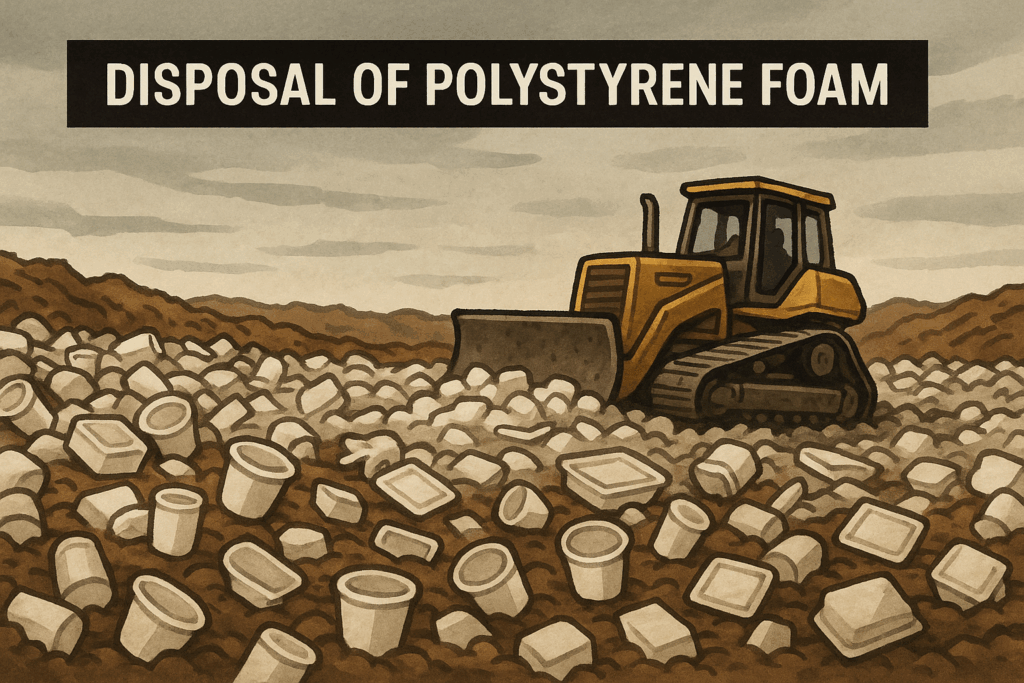
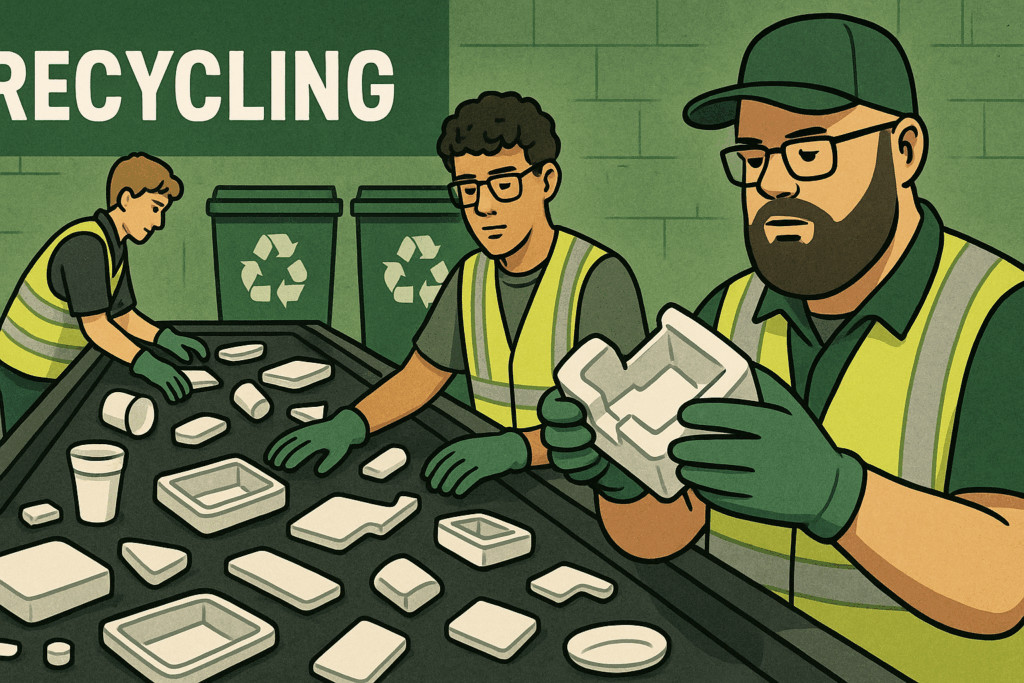
  1. Focus: The challenges of biodegradability, landfill accumulation, and recycling limitations.
  2. Visuals: Landfills, recycling plants, environmental cleanup footage.
  3. Solutions: Emerging biodegradable alternatives and circular-economy initiatives.
  4. Narration cue: End with a question: how do we balance convenience, safety, and sustainability?

IX. Conclusion – Reflection and Legacy

  1. Summary: Revisit how polystyrene mirrors American culture innovation, abundance, and consequence.
  2. Closing narration: “From the battlefields of World War II to the kitchens and orbiting spacecraft of today, polystyrene tells a story of invention’s promise and the responsibilities it leaves behind.”
  3. Visuals: Montage transitioning from historical footage to modern recycling efforts.
  4. Credits: Group acknowledgments, UMW Digital Knowledge Center, and PowerDirector 365 production.

Polystyrene Outline

Current image: “Examining Pieces of Styrofoam at Dow Chemical Company.” 2025. Science History Institute Digital Collections. 2025. https://digital.sciencehistory.org/works/tx31qj223/viewer/pz50gw679.
“Examining Pieces of Styrofoam at Dow Chemical Company.” 2025. Science History Institute Digital Collections. 2025. https://digital.sciencehistory.org/works/tx31qj223/viewer/pz50gw679.

Documentary Outline

“Polystyrene: From War to Waste and Beyond”

I. Introduction – The Material that Shaped Modern America

  1. Opening visual: Archival footage of WWII manufacturing lines and consumer packaging.
  2. Narration focus: Introduce polystyrene as a product of innovation, born from wartime necessity, that transformed industries and daily life.
  3. Context: Briefly trace discovery by Eduard Simon (1839) and refinement by Ray McIntire at Dow Chemical during WWII.
  4. Thesis statement: What began as a military innovation evolved into a ubiquitous material touching defense, safety, space exploration, and food preservation—leaving behind both cultural convenience and environmental consequence.

II. Military Applications – The Wartime Catalyst

  1. Historical background: WWII rubber shortages and search for substitutes.
  2. Focus: Ray McIntire’s accidental creation of foam polystyrene; adoption for insulation, flotation devices, and protective packaging of military equipment.
  3. Visuals: Wartime footage, factory production scenes, patent documents.
  4. Significance: Demonstrate how military research laid the foundation for postwar consumer adaptation.

III. Safety and Industrial Applications – Protecting Lives and Machines

  1. Examples: Safety helmets, construction insulation, impact-absorbent materials.
  2. Narration: Emphasize technological confidence in plastics as durable, lightweight, and affordable.
  3. Visuals: Construction sites, laboratory drop tests, 1950s safety advertisements.
  4. Cultural connection: The postwar belief that synthetics symbolized progress and security.

IV. Packaging Revolution – The Consumer Boom

  1. Theme: How polystyrene became central to the American consumer economy.
  2. Examples: Disposable cups, trays, and shipping containers; rise of fast-food convenience.
  3. Narration cue: Link mass production to postwar prosperity and domestic culture.
  4. Visuals: 1950s-1960s commercials, supermarket aisles, assembly lines.

V. NASA and the Space Age – Polystyrene Beyond Earth

  1. Focus: Use in spacecraft insulation, lightweight instrument housings, and experimental materials for zero-gravity environments.
  2. Visuals: NASA archival footage, Apollo and Shuttle imagery.
  3. Narration: Connect technological ambition with the adaptability of synthetic materials.
  4. Broader point: Innovation in one field accelerated breakthroughs across others—symbolizing American ingenuity.

VI. Food Preservation – Extending Shelf Life

  1. Science segment: Explain insulating and non-reactive properties that revolutionized refrigeration, food transport, and take-out culture.
  2. Visuals: Laboratory experiments, refrigerators, early microwavable containers.
  3. Cultural tie: The convenience economy and the emergence of “disposable dining.”

VII. Health and Environmental Concerns – The Price of Progress

  1. Key issues: Styrene exposure, toxicity studies, worker safety regulations.
  2. Narration: Introduce debates over microplastics and long-term health impact.
  3. Visuals: News reports, EPA documents, interviews with scientists or historians.
  4. Contrast: Scientific innovation vs. unforeseen human cost.

VIII. Disposal and Recycling – From Utility to Sustainability

  1. Focus: The challenges of biodegradability, landfill accumulation, and recycling limitations.
  2. Visuals: Landfills, recycling plants, environmental cleanup footage.
  3. Solutions: Emerging biodegradable alternatives and circular-economy initiatives.
  4. Narration cue: End with a question: how do we balance convenience, safety, and sustainability?

IX. Conclusion – Reflection and Legacy

  1. Summary: Revisit how polystyrene mirrors American culture innovation, abundance, and consequence.
  2. Closing narration: “From the battlefields of World War II to the kitchens and orbiting spacecraft of today, polystyrene tells a story of invention’s promise and the responsibilities it leaves behind.”
  3. Visuals: Montage transitioning from historical footage to modern recycling efforts.
  4. Credits: Group acknowledgments, UMW Digital Knowledge Center, and PowerDirector 365 production.

Documentary Outline

Starting clip (1 min or less): 

  • People are hanging out in Abby’s room having such a great time, listening to music on the boombox
  • open a box w/ blank cassette w/ the doc title written on it and we insert it into a boombox and hit record 
  • documentary title card appears

Introduction (2-3 min):

  • Give brief statements recorded by us about what cassettes are and their popularity/cultural impact
    • background speed run for anyone who has never heard of a cassette before
  • Transitions into the first couple questions of the interviews (we’ll show a couple clips)
    • Questions:
      • What music did you like to listen to in the 1970s-80s?
      • What did you use to listen to music before cassettes?
      • Did you have cassettes? How much would you say that was the way you listened to music?
  • Finishing the introduction with another brief clip of us setting up the rest of the documentary, transitioning into taking the audience back in time to learn what existed before the cassette.

Transition into history (2-3 min): clip of interview with inventor

  • “before their were cassettes, there were…”
  • History – Antecedents
    • records
    • 8-track tapes
    • reel-to-reel audio
  • Invention
    • Who? What? When? Where? Why?
    • We would show images of the inventor, potentially clips from his interviews

Transition into adoption/impact (4 min): clip of a person running down campus walk/college ave and they stop, flip the tape in a walkman, and keep running

-Section title card-

  • Adoption
    • What led to the cassettes’ success?
      (possibly more clips from interviews here!)
      • Walkman
      • Customizable mix-tapes!
  • Alternatives
    • CDs
    • Streaming
    • Radio
  • Cultural Impact
    • Mixtapes
    • Portability of music
    • Here is where we can add in more clips from the interviews about how they were impacted by cassettes and their ability to listen to music

    Transition: What’s the future for cassettes? (1-2 min)

    • Tie back to interviews

    Closing: clip of ejecting from boombox and putting the cassette from the beginning back into the case.

    Website Outline

    Pages: 

    • History
      • Context (background)
        • what was the music landscape like before cassette tapes took off?
      • Antecedents
      • Invention
      • Production
    • Impact
      • Selection / Adoption
        • Brief discussion of cassette sales, success in the music industry
        • Alternatives
          • CDs
          • Streaming
      • Cultural Impact
        • Portable ways of listening to music 
        • Mix-tapes 
        • Continuing cultural relevance 
      • Full Interviews
        • with link to documentary in post
    • About
      • Proposal/Bibliography
      • Documentary
        • link to full interviews in post
      • Media Library
        • General gallery of every image used on the website and citations, as well as additional images
        • links to Interviews post and Documentary post
    • Most information will be published in the form of posts, and then corralled onto their respective pages

    Media: 

    Media will be embedded in relevant blog posts, but we are also going to create a media library / gallery as a separate page on the website where all the media can be easily found for reference. 

    • Images of cassettes: this could be a mixture of images we find online and ones we take ourselves
    • Documentary and transcript
    • Uncut (lightly edited) versions of documentary interviews with written transcripts
    • Primary sources (advertisements, reviews, interviews, etc.)

    No AI will be used in the creation or selection of media on our website.

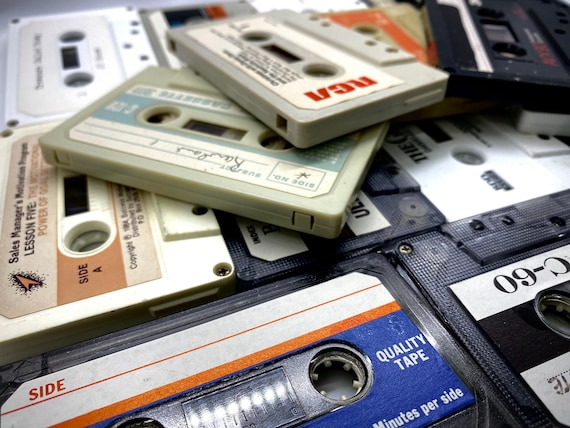
    Key image:

    a pile of assorted cassettes
    Vintage Cassette Tape Lot, Image by Momentum Vintage on Etsy

    Momentum Vintage. Vintage Cassette Tapes Lot. n.d. Etsy. https://www.etsy.com/listing/1076120560/vintage-cassette-tape-lot-of-100-music?dd_referrer=https%3A%2F%2Fwww.google.com%2F .

    IMAX: Project Outlines

    Website Outline

    Pages

    • Home page – introduction, overview
    • artifacts
      • sound system
      • curved screen
      • projector
      • film camera
        • reviews
        • videos on quality difference 75 mm vs 35 mm – dvd screen size selection
        • promotions for original screening / promotions for imax
    • antecedents
      • photos
      • patents / drawings / mockups
    • process – timeline (timeline js /  wordpress timeline block) quick overviews of events
      • Linking to antecedents page when needed
    • alternatives
      • standard movie theaters – what systems do they use?
        • digital light processing
        • digital cinema initiatives
    • dolby vision & dolby atmos
    • 3d & 4d
    • at home cinema / streaming
    • Interactions w/ society
      • increase of popularity, preference
      • economic impact – ticket prices, resurgence of theater industry
      • effect of covid – desire to bring people back to theaters
      • Imax exclusive (directors)
      • Film maker experience vs viewer experience
    • documentary – separate page
    • bibliography – separate page

    Documentary Outline

      • introduction – what is imax
      • how it began – who started it
        • meet the people
      • why is it important – impact
        • use in museums
        • Economic impact
      • effects / interaction with society
        • interviews with personal experiences
        • covid
        • re-releases
      • future? – what is next and/or problems with IMAX
        • competitors 
        • usage with directors vs experience

      needed elements:

      • B-roll of imax/movies/theatres
      • Interviews (primary and reused)
        • Interviewing people who experienced imax and also taking interviews from filmmakers + inventors & ceos of imax company
      • Photographs
        • imax/movies/theatres