

Khalid, Farisa. “Henry Ossawa Tanner, The Banjo Lesson.” September 9, 2016. Accessed September 19, 2025. https://smarthistory.org/tanner-banjo/.
Khalid, Farisa. “Henry Ossawa Tanner, The Banjo Lesson.” September 9, 2016. Accessed September 19, 2025. https://smarthistory.org/tanner-banjo/.
Test blog post!
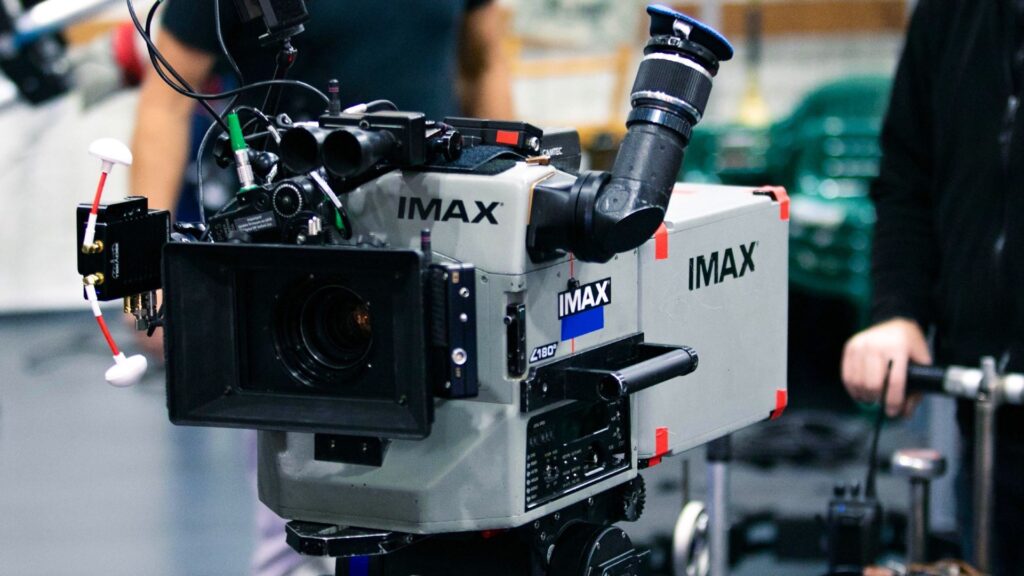
“IMAX Filmmaking: What is it like to Shoot on an IMAX Film Camera?” Y.M. Cinema Magazine. The Technology Behind Filmmaking, March 10, 2020. https://www.google.com/url?sa=i&url=https%3A%2F%2Fymcinema.com%2F2020%2F03%2F10%2Fimax-filmmaking-what-is-it-like-to-shoot-on-an-imax-film-camera%2F&psig=AOvVaw1sNuQz3Dk1QpezWEheeTPS&ust=1758293941009000&source=images&cd=vfe&opi=89978449&ved=0CBYQjRxqFwoTCOirosXJ4o8DFQAAAAAdAAAAABAV
A VHS tape typically lasts between 10 – 25 years!
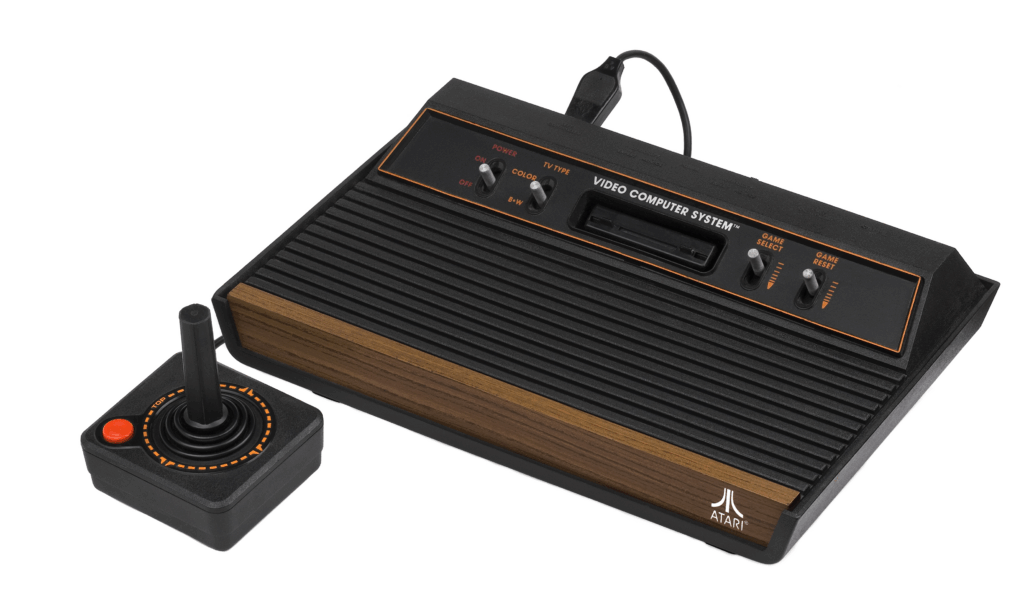
Above me is an Atari 2600. Atari 2600. (n.d.). Retrieved from https://upload.wikimedia.org/wikipedia/commons/b/b9/Atari-2600-Wood-4Sw-Set.jpg.
Hello! This is my test blog post!
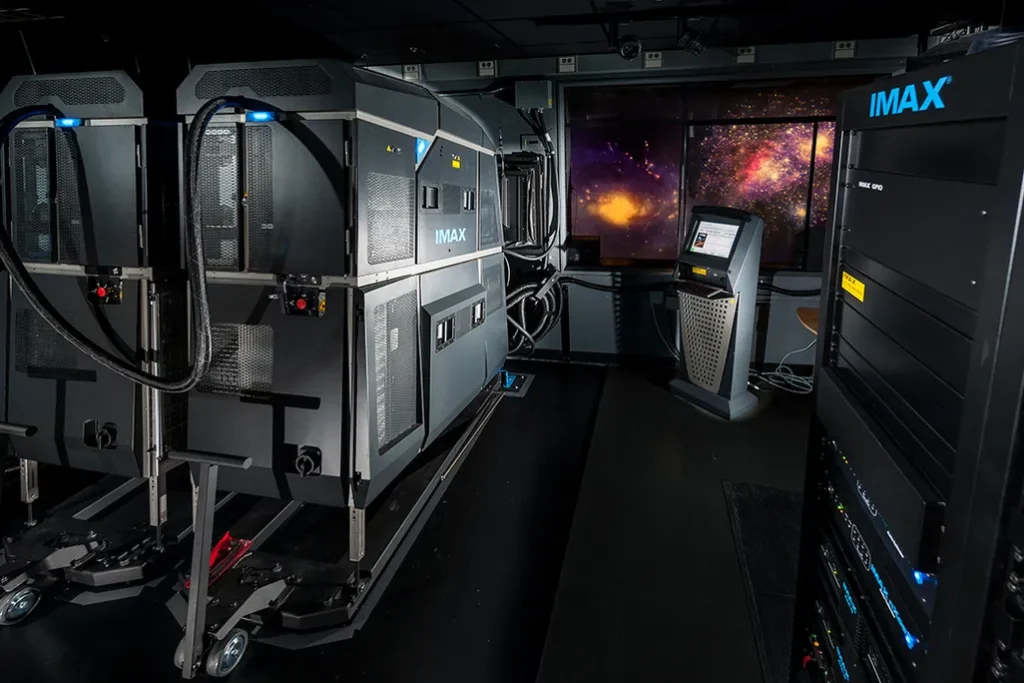
“How the Big Screen IMAX Experience Just Took a Quantum Leap Forward” May 13, 2015. Photograph. Smithsonian magazine. https://www.smithsonianmag.com/smithsonian-institution/imax-experience-udvar-hazy-center-took-quantum-leap-180955193/.
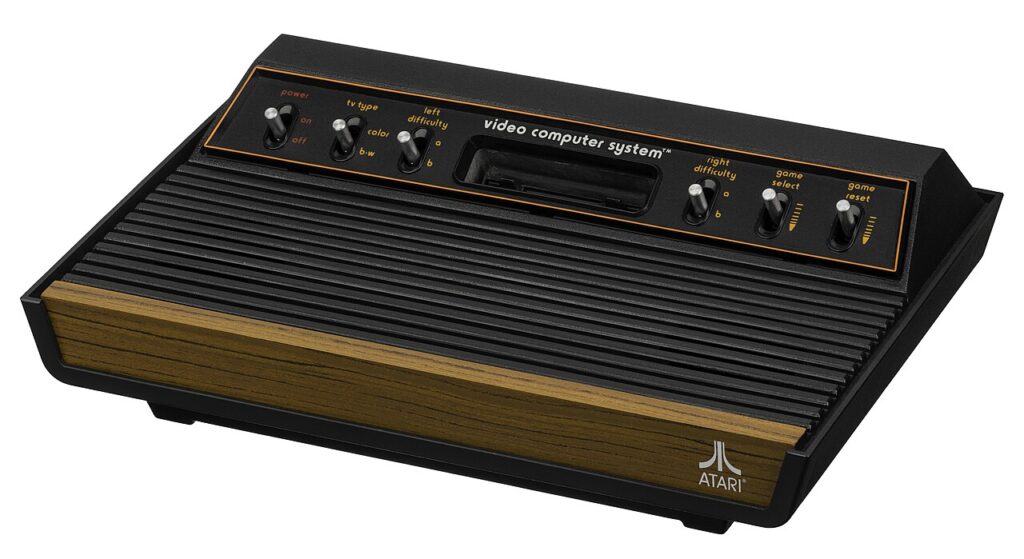
The Atari 2600 Video Computer System (or VCS), launched in September of 1977. It is well remembered as one of the earliest gaming systems in history (coming out sometime after the Magnavox Odyssey). A key component that brought the system to life and would change modern technology forever is the microprocessor, otherwise known as the computer chip.

By Dirk Oppelt – http://www.cpu-collection.de/, CC BY-SA 3.0, https://commons.wikimedia.org/w/index.php?curid=91538
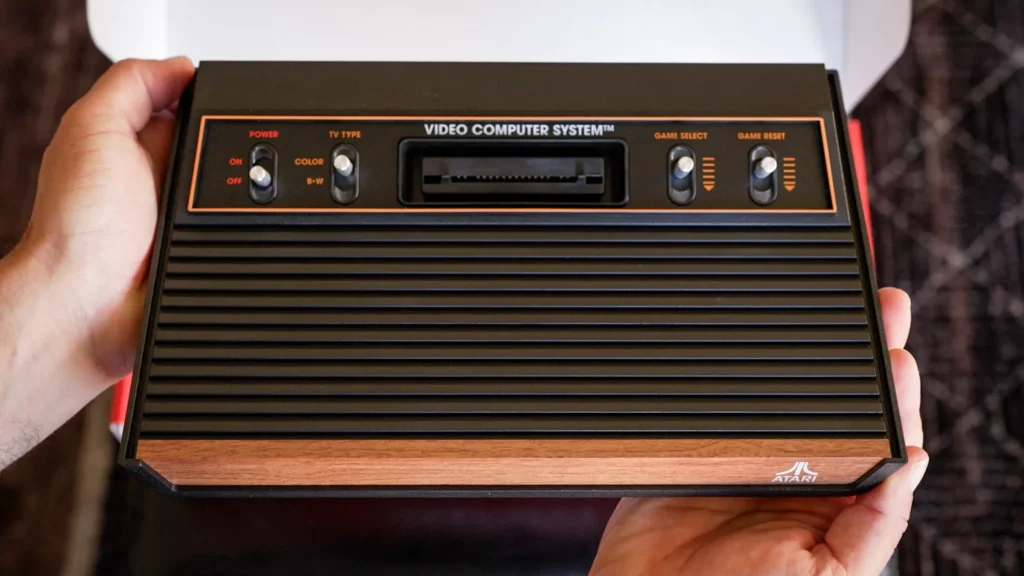
Admittedly, I’m not an expert on the Atari 2600, but I had in fact heard of it before this project!
Widely successful for its vibrant colors, sharp sounds, and interchangeable game cartridges, made this a hot commodity at the time of its release in the late 1970s. Above, I have attached a photo of the newly updated Atari 2600+. With a strong likeness to its predecessor, the 2600+ model features the iconic 4-switch facade and its cartridge based console, with the new addition of an HDMI port to connect to modern TVs. Preserving the vintage feel while making something that can easily adapt to today’s living rooms. Pretty neat!
I couldn’t go this whole project without shouting out the first song that I thought of when the Atari 2600 was brought up in our early discussions. Singer and Actress, Ariana Grande, has been ringing through my ears anytime I go near this project! The title song off of her recent Eternal Sunshine album will, I fear, never leave my mind, and I’m not complaining. The “Let you play me like Atari” line just really scratches my brain in the right way. I’ve linked the song above if anyone happens to stumble across this page and listen to Ariana’s heartbreak to a sick beat, feel free to give it a listen!
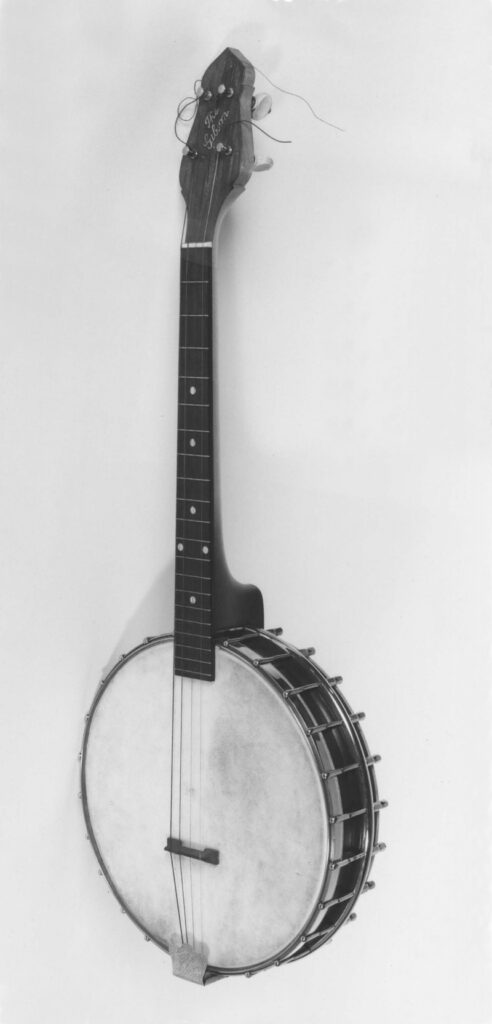
“Gibson Tenor Banjo | Smithsonian Institution.” Smithsonian. Accessed September 17, 2025. https://www.si.edu/object/gibson-tenor-banjo:nmah_606326.
Did you know?
During the 1980s, there was a form of magazine created and published entirely on compact cassette tapes? Similarly to today’s podcasts, these “tape-zines” as they are often called, were formatted like radio shows, with ads and notices of new music, interviews with artists / musicians, and more. They were around 60 minutes, and in most cases, available worldwide. The majority did not last very long, suffering losses due to copyright laws, production costs bringing down self-produced tape-zines, and other issues.1 Tape-zines like SFX Magazine or Fast Forward could also put more focus on the artists themselves, or bands that were going unrecognized by the mainstream audience. Fast Forward, for example gave more recognition to punk bands in Australia, who were getting very little recognition, especially when compared to American or English punk bands.2
One example of a tape-zine can be found at the following link:
SFX Magazine – Internet Archive
 ︎︎
︎︎Western saddles are made up of many parts. This photo shows one possible design.